



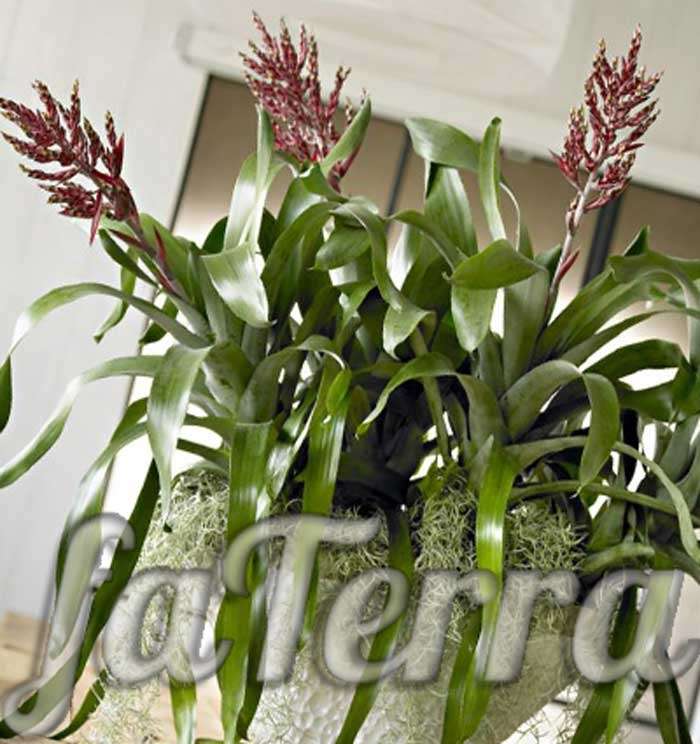
Latin name: Aechmea
Category: epiphytic herbaceous plants
Origin: tropics of South and Central America
A warlike and unique exotic - the beautiful Aechmea
Aechmea is an envoy of the large and interesting Bromeliaceae family. More than 200 species of herbaceous perennials of striking beauty, unusual appearance, and a special, peculiar structure of plants are united in this genus. Its description dates back to the late eighteenth century. Already in the nineteenth century, Aechmea was popular and adorned botanical gardens. The unusual inflorescences of Aechmea are still popular today. They are favorite representatives of tropical exoticism in greenhouses, kindergartens, offices, hospitals, and apartments.
Wild specimens of epiphytic Aechmea thrive in various climatic regions of South and Central America, both at sea level and in mountainous areas. The colorful flowers also adapt to bright sunlight and shade on rocky outcrops and tall trees. After all, this is their homeland.
Like its relatives, Vriesea and Tillandsia, the beautiful Aechmea gathers its long, linear leaves into an elongated, funnel-shaped rosette, which resembles a goblet. The leaves of Aechmea differ from other bromeliads in their spiky tips. The very effective inflorescence with short-lived flowers delights the eye with colorful bracts for a long time, but only once.
Aechmea got its name from its charming, pointed bracts. In Greek, "aechme" is associated with the tip of a spear.
Aechmea species
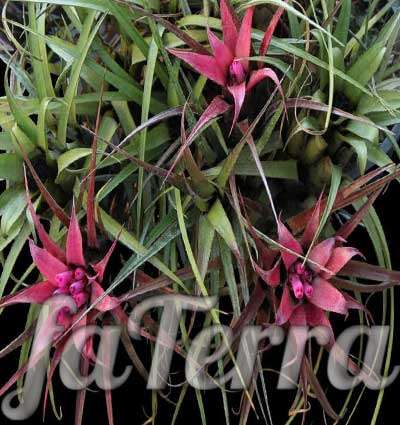
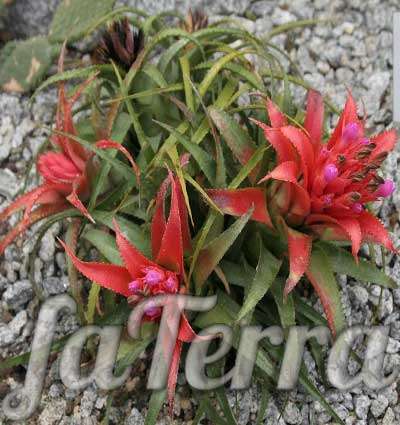
Aechmea recurvata
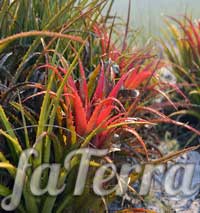 In its natural environment, Aechmea is an epiphytic and terrestrial plant. The few spiky leaves, up to 50 cm long, form an effective goblet-shaped rosette. In spring, the large, bright red inflorescence with red bracts delights the eye and can be a decoration for any room.
Aechmea weilbachii
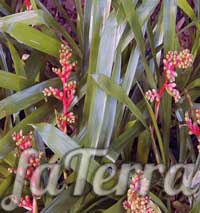 It forms a dense, half-meter-long rosette in the shape of a fern with pointed, leathery leaves. The plant is decorated with a straight, tall flower stalk up to fifty centimeters long. Bright red leaves, arranged in the form of tiles, are tightly attached to it. The very top consists of complex, curved, fifteen-centimeter inflorescence-spikes, gathered in six sessile blue-blue flowers.
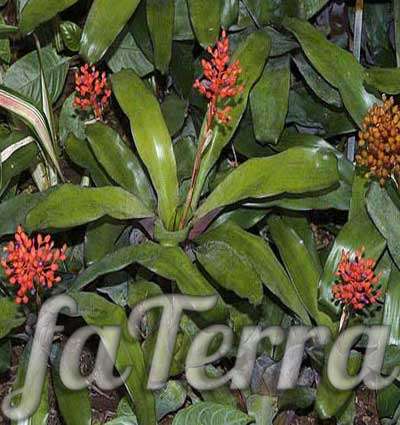
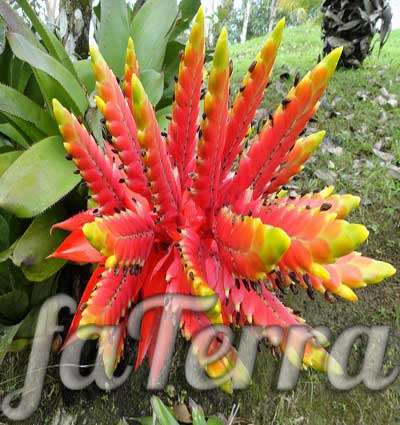
Aechmea comata, also known as Aechmea lindenii
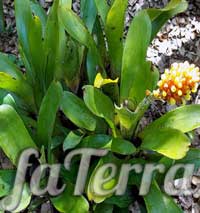 Narrow, meter-long, serrated leaves are densely arranged one after another, forming a rosette. A red-yellow inflorescence, similar to a spike, rises from its center. It blooms in winter with bright yellow flowers.
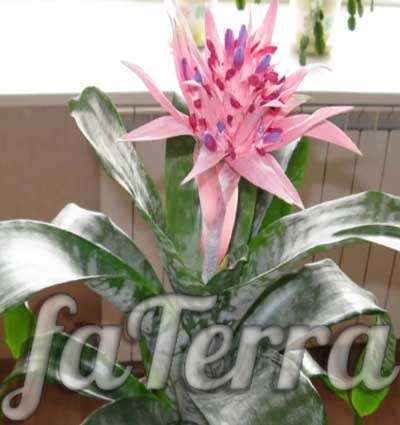
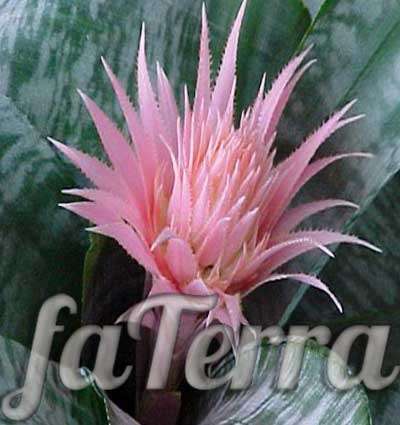
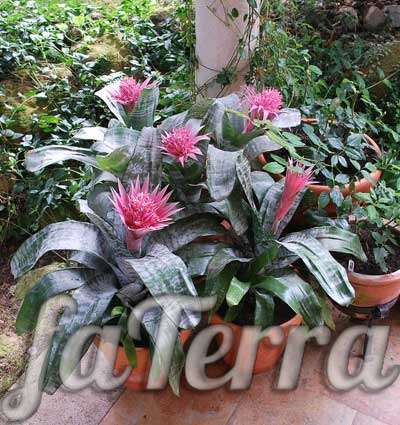
Aechmea fasciata, sometimes called Billbergia fasciata
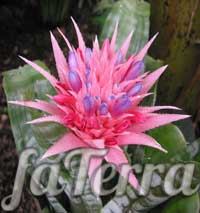 The elongated, gray-green leaves with transverse white marble stripes form a fifty-centimeter-long, tubular rosette. A straight, scaly, vertical flower stalk bears a thirty-centimeter-long, complex, pyramidal inflorescence with pink bracts. The blue flowers turn reddish during flowering.
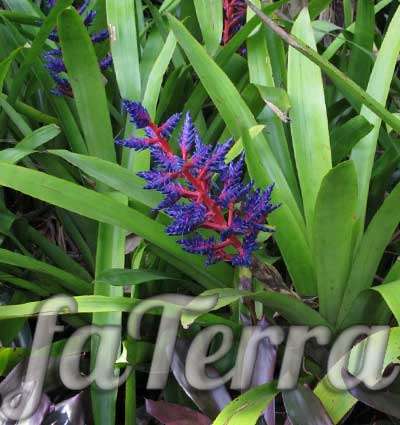
Aechmea "Blue Tango"
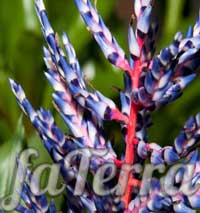 This amazing plant, which can be considered the most undemanding in terms of cultivation, will look charming in winter gardens, offices, and apartments. Dense, leathery, linear, narrow leaves form a funnel. A massive flower stalk rises from its center, decorated with a colorful inflorescence of small, bright blue flowers.
Aechmea care in the home
Aechmea can become an unsurpassed decoration for any home collection of flowers. And to ensure comfortable conditions for the plant, let's consider the simple rules in more detail.
Choosing a place and lighting
Aechmea, which loves light, needs intense but diffused light. It will feel good on the east or west side, and in the summer it will not refuse to be near the south-facing windows and in the garden or on the balcony, closer to fresh air. Drafts and precipitation are contraindicated for the plant.
Temperature
The optimal summer temperature for Aechmea is 20-27°C, and the winter temperature is 15-18°C. The critical temperature is 16°C. Cool temperatures will stimulate the appearance of bright and colorful flower stalks.
Watering and air humidity
The criterion for proper watering in summer is slightly moist soil. Every seven days, pour soft water into the rosette to a level of 2.5 cm. In winter, water the plant when the soil dries out.
Aechmea does not require high humidity. It can grow even in dry air, but it is still a tropical plant, and to improve its growth, the humidity needs to be increased. Spray Aechmea with warmed and settled water. It is not necessary to wipe the leaves of Aechmea.
Soil mixture
Choose a light and fertile soil. For the composition of the mixture, take equal parts of sand, peat, and leaf compost. You can add sphagnum. Drainage is necessary.
Fertilizers
Feed with soluble fertilizers during the warm period every thirty days.
Aechmea transplanting and propagation
Transplant the Aechmea when the weather warms up. You need to separate and plant the offspring. They must have roots. In this way, we can propagate our favorite flower. Be sure to spray the transplanted shoot. It is also possible to propagate Aechmea by seeds, but this process is longer.
Diseases and pests
A quality inspection of the plant can prevent the possibility of unwanted guests appearing on the Aechmea:
- aphids,
- mealybugs,
- scale insects,
- spider mites.
When insects appear, immediately treat with a soap solution, and then with chemical preparations.
Write comments
Comments