




Latin name: Cycas
Category: evergreen trees
Origin: subtropics and tropics of Malaysia, China, Japan, Australia
Interesting facts about Cycas - the beauty of the tropics
Cycas (Cycas) also has beautiful names such as sago palm. It combines seed plants in a single genus of the Sago family. There are more than a hundred species of these unique plants.
The area where this oldest plant on Earth lives, a contemporary of dinosaurs, is considered to be all parts of the world, with the exception of the European continent and Antarctica.
Cycas got its name from Carl Linnaeus. If translated from the Greek language, "kykas" means palm. Sago palm is another name for this exotic plant. The name comes from "sago" - an unusual starch that is found in the trunk, bark, and seeds of the plant. For local residents, sago is an important food product. Therefore, there are other names for the cycas palm - "kaffir bread", bread tree, sago palm. Sago palm flower arrangements have found wide application in the plant's homeland.
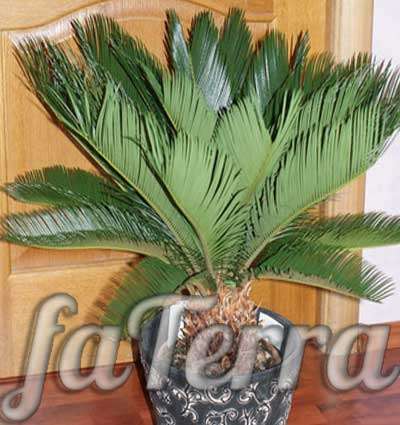
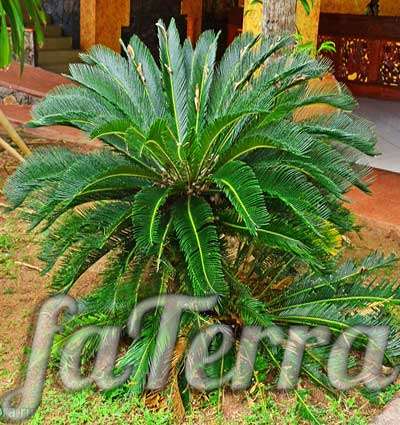
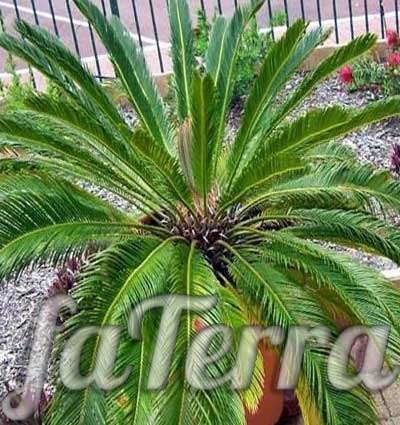
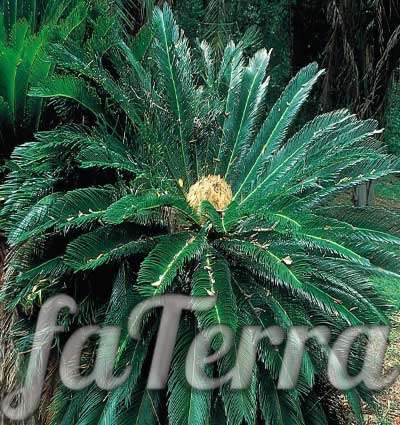
Cycas sago is a popular plant, a "living fossil" from the Mesozoic period or the "era of sago palms". It grows very slowly and, in some ways, resembles fern. Natural conditions allow it to be both a small and a very large plant with a powerful caudex covered with a shell of dried leaf remains. The unparalleled and unique decoration of this sago palm is its huge crown with 60 fronds, which are called fronds. They are collected in a rosette. Young leaves consist of segments located on the central, powerful vein, they are curled in spirals, and as they age, they unfold. The height of sago palms can reach seven meters with a trunk diameter of more than a meter.
Sago palms are long-lived and live for more than a hundred years, and each individual leaf adorns the plant for three to ten years.
In the botanical garden of Great Britain, you can admire a sago palm that is over 200 years old.
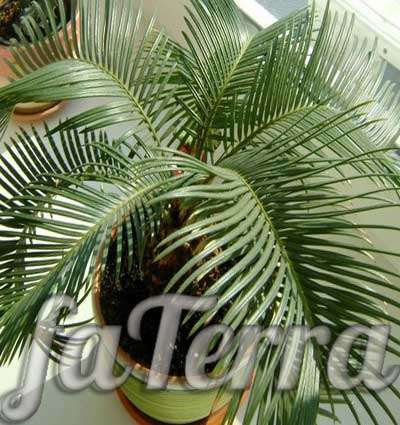
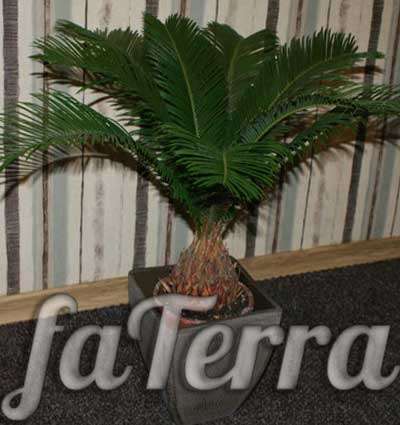
The indoor cycas plant reaches a height of only half a meter. This decorative wonder, which grows slowly and rarely blooms, is increasingly becoming a resident and decoration of apartments, offices, kindergartens, hospitals, and greenhouses. Cycas palm is an expensive and desirable element of decor, and it is often used for bonsai.
Types of cycas
Cycas revoluta
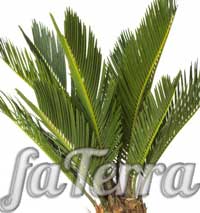 Cycas revoluta is the most popular, evergreen, decorative species that grows very slowly and, with good care, can reach a height of three meters, and in its natural environment - up to 8 m. A relatively small crown rises on a thick trunk. The plant consists of leathery, narrow, linear leaves up to two meters long, densely arranged. They are slightly bent back. Fresh, young leaves have a light green color, and as they age, they become more solid and dark green. As the leaves age, they die and expose the thick, columnar caudex.
The translation of its name from Latin means "bent back". And indeed, the leaves of the cycas plant tend to unfold from the central vein of the leaf as they grow.
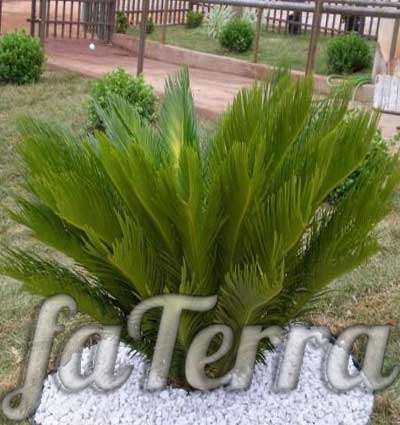
The southern part of Japan is considered the homeland of cycas revoluta. And the area of its distribution is the Caucasian coast of the Black Sea. This wonderful exotic has become a permanent resident of gardens and parks, where it decorates alleys and lawns.
Cycas revoluta care in the home is not particularly difficult. The plant needs good lighting, regular abundant watering, attention, and a little love.
Cycas circinalis, also known as cycas spiralis
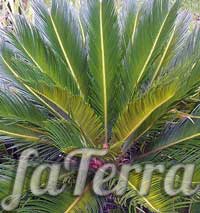 Elegant, evergreen, decorative, woody perennial plant. The beauty of this exotic is its large, wide, pinnate two-meter leaves, which are divided into hundreds of narrow leaf-lobes, the base of which is the central vein. The length of each segment reaches 25 cm, and the width is 1.5 cm. Young fronds are directed vertically upwards, and as they grow, they increasingly lean towards the ground, taking a horizontal position.
Only cycas circinalis produces lateral shoots, which are an excellent material for reproduction.
The native habitats of cycas circinalis can be considered Australia, India, the islands of Taiwan, Sri Lanka, Fiji, and the Philippines.
Cycas rumphii
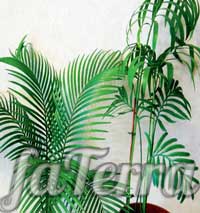 Sri Lanka is the homeland of the tallest representative of the genus. This plant can reach a height of fifteen meters, and even exceed it. The top of the trunk is decorated with a bunch of huge, two-meter pinnate leaves. Linear segments-leaves are densely arranged along the central vein, their length is 20 cm, and the width is 1 cm.
Cycas pectinata
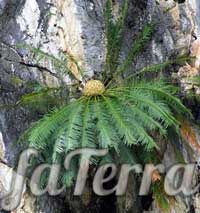 India, Vietnam are the areas of distribution of these small sago palms. The plant got its nickname because of the similarity of the shortened leaf plate of the megasporophylls to the crest of a rooster.
Cycas siamensis
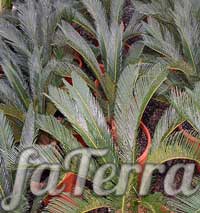 Most often, these sago palms can be found in Indochina. The caudex reaches a height of up to two meters. The lower part of the trunk has a thickening. On the spiky, yellowish petioles are located narrow linear leaves up to 10 cm long, and their width is up to 5 mm. They form pinnate leaves up to 120 mm long.
Cycas media
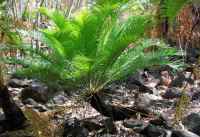 A very ancient species of sago palm, native to Australia. The plant reaches a height of seven meters. It has a chic, shiny, dark foliage with an elegant arcuate bend.
In the nineteenth century, the inhabitants of the northern part of the Australian continent used the seeds of this plant for food.
Cycas care in the home
Caring for indoor cycas flowers is not difficult. These exclusive, long-lived, ancient beauties are not whimsical exotics and do not require specific and scrupulous care.
Sufficient lighting, fresh air, and comfortable humidity levels are the main difficulties in growing this indoor crop.
Choosing a place and lighting
A stable, diffused, intense light throughout the year will be comfortable for the sago palm. This will be facilitated by placing it in rooms with a southern, southwestern, or southeastern orientation. As an option for success, in the summer months, keep the sago palm in the garden, on the balcony, and provide it with diffused bright light, partial shade. Then the cycas flower will delight you with its lush and beautiful crown.
Temperature regime
It prefers warm rooms with a favorable air temperature of 20-24 ° C, closer to winter, the temperature should be gradually reduced to 12-18 ° C.
Air humidity and watering
Cycas needs high air humidity. The plant should be regularly sprayed every two days or its leaves should be wiped. If the temperature in the room is above 20 ° C, the sago palm can be placed in a tray with moist expanded clay.
Cycas should be watered with warm, settled water, and preferably with thawed or rainwater. The frequency of watering in summer is 4-5 times a month, and in winter - about three times a month, depending on the temperature in the room.
Cycas transplant and suitable soil
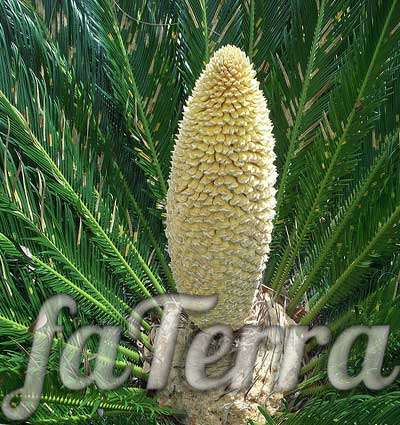
Cycas care is not difficult. An important role is played by the annual spring transplant of young plants. When the plant is five years old, it is transplanted every five years. The pot should be selected not too large in size with holes so that there is no stagnation of excess soil that is not occupied by the roots. Transplanting is a painful procedure for cycas. It is not recommended to shake and wash the roots. Be sure to check the location of the cycas cone - it should be on the surface of the soil.
You can buy ready-made "Palm" soil in the store. You can prepare a nutritious soil mixture yourself: sod, peat, leaf, humus, and sand - take all in equal quantities. You can add wood charcoal.
Propagation of cycas
It is easiest to propagate with young shoots. Carefully cut off the lateral shoot. Treat the cut site with crushed charcoal or sulfur. Dry the cuts for a day and plant in a substrate for transplanting, water moderately.
Propagation by seeds is not a realistic process.
In indoor conditions, cycas practically does not bloom. There are, of course, no seeds. And sago palms are propagated from seeds by professionals. This is why there are botanical gardens, greenhouses, and nurseries.
Pests and diseases
Cycas is rarely affected by scale insects, spider mites, and mealybugs. If insects are found, the plant must be treated with aktellik or other insecticides.
Difficulties in growing cycas
- Cycas has yellow leaves, what to do? It is necessary to find out the reason and take measures to rehabilitate. The leaves may turn yellow due to a lack of fertilizers in the soil, the appearance of insect guests, the decay of the roots due to overwatering, or excessive or insufficient watering.
- The plant sheds leaves - the air is too dry.
- The leaves are brown, become flabby, the roots rot, mold grows on the trunk, the plant dies - it is too cold in the room, they forgot about drainage during planting, and, probably, the density of the soil is too high.
It must be remembered that cycas is poisonous. Another poisonous plant is dieffenbachia.
Love your sago palm, follow the recommendations for growing it, and you will be able to enjoy the unusual beauty of your pet.
Write comments
Comments