



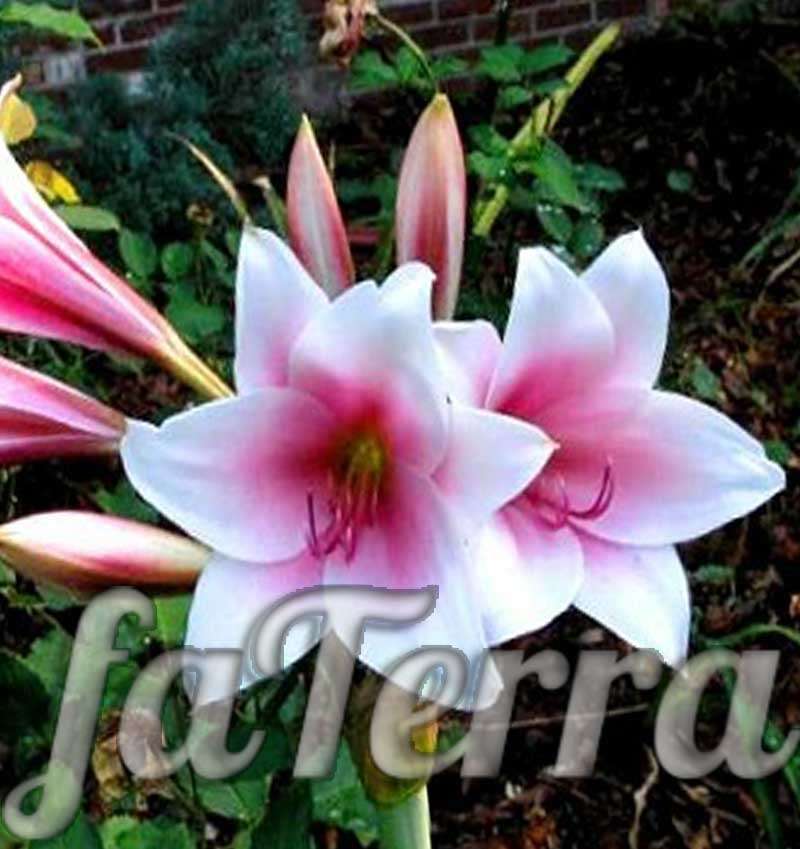
Latin name: Crinum
Category: bulbous herbaceous plants
Family: Amaryllis (Amaryllidaceae)
Native to: Southern Africa and tropical America
An interesting short overview of crinums
Crinum (Crinum) or crinum is a genus that includes over 100 species of lush, evergreen flowering bulbous plants belonging to the Amaryllis family (Amaryllidaceae).
The native land of this wonderful exotic plant can be considered America, Africa, and Southeast Asia. Mainly, crinums can be found in swampy areas, river and sea banks, tropical and subtropical regions around the world.
The name crinum in translation from Latin means "hair". And indeed, the shape of its linear and sword-shaped leaves really resembles hair that hangs.
The crinum flower is quite large. This is what distinguishes it from other representatives of the Amaryllis family. In most species of crinums, there is an elongated bulb that gradually turns into a false stem. It serves as the base for green, two-meter-long leaves that form a rosette. It is these tubular leaf blades of the crinum that resemble hemanthus
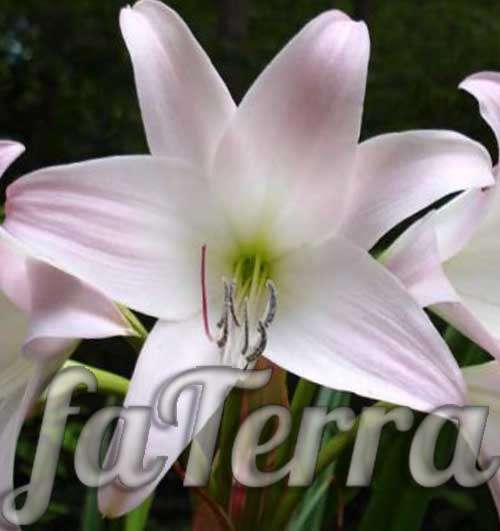
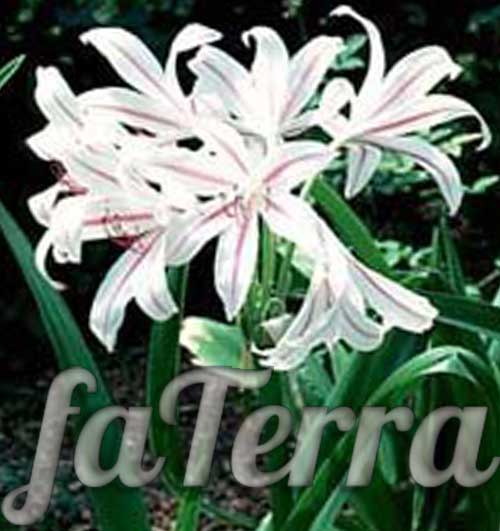
The extraordinarily charming white or pink giant flowers rise on a peduncle in the form of an umbrella-like inflorescence. It is for this beauty that the crinum also has another name - pink lily
It is interesting that some crinums can perfectly grow in aquariums.
The crinum plant looks great and beautifully decorates offices, halls of theaters, concert halls, and cold winter gardens. Garden crinum is always a welcome guest in suburban areas for amateur gardeners.
Crinum species
Crinum moorei
 This species of crinum is very common in cultivation, especially suitable for greenhouses and winter gardens.
The rocky slopes and forest areas of the province of Natal in South Africa are considered the native habitats of Crinum moorei.
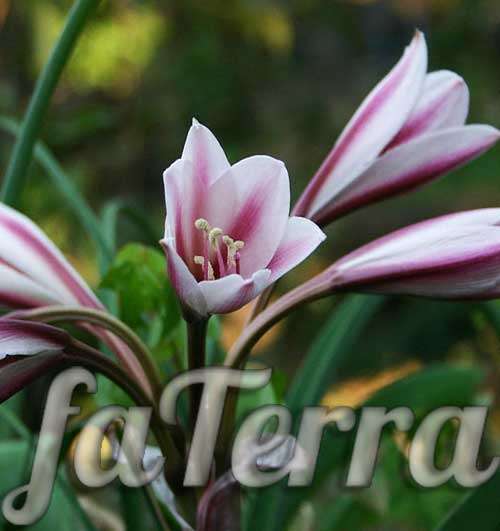
A perennial plant has a height of almost a meter and a half. The plant consists of a spherical bulb of a decent size, with a diameter of up to twenty centimeters, which is located in the ground to about half its size. From a long, almost half-meter "neck" - a false stem, about 15 light green leaves with embossed veins appear. Above the half-meter leaf rosette, a magnificent inflorescence - an umbrella - is located not very high. It consists of twelve pink bell-shaped flowers, reaching up to eight centimeters in length.
Crinum powellii
 As a result of crossing two crinums, representatives of South Africa, Crinum moorei and a bulbous-seed species, a light-loving, very hardy, frost-resistant perennial plant, Crinum powellii, appeared. Its bulb can reach up to twenty centimeters in diameter. Meter-long, belt-like leaves form a rosette. About a dozen bell-shaped flowers with pointed edges on the petals participate in the formation of an umbrella-shaped inflorescence of bright pink, red, or white color.
Crinum latifolium
 In nature, Crinum latifolium is widespread in the countries of Southeast Asia, as well as in India and China.
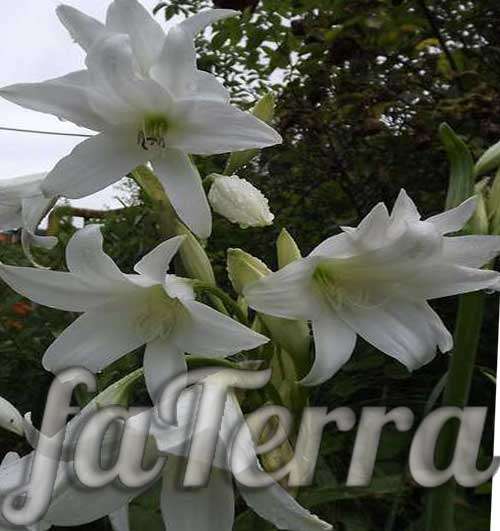
A large, round bulb up to 20 cm smoothly transitions into a small neck. The top of it is decorated with a bundle of meter-long, thin, ribbon-like green leaves. And from August to October, this giant is decorated with numerous funnel-shaped, up to 30 cm long, fragrant flowers, collected in umbrella-like bouquets - inflorescences of white or pink color.
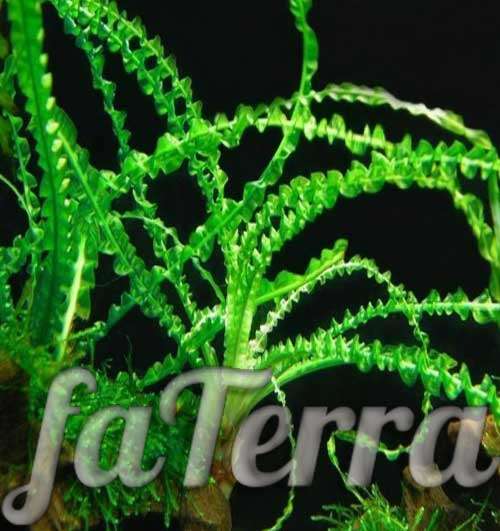
Crinum calamistratum, also known as wavy crinum
 There are about fourteen species of aquatic crinums in the wild. They are similar to each other in a number of common features. Mainly, these are bulbs with many scales and roots with weak branching, and they are decorated with long, ribbon-shaped leaves.
Aquarium crinum and its varieties will be discussed further. They can be called the kings of the world of aquarium flora.
The rivers and streams of western Cameroon are the native habitats of wavy crinum. It also has the name curly crinum. Due to its original, luxurious appearance and ease of cultivation, wavy crinum often becomes a decoration of any underwater landscape.
The unusual and amazing rosette consists of long, meter-long, dark green, rough, brittle leaves. The edge of them is wavy. The plant loves bright light, develops well, and multiplies quickly by bulb-offspring.
Crinum thaianum
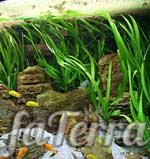 It is not difficult to guess that the native habitats of this strong and beautiful plant are southern Thailand.
In an aquarium, Crinum thaianum will look very majestic against the back wall. The length of its leaves reaches one meter, and the width is up to three centimeters. The color of the leaves contains a diverse spectrum of green, from light to dark. If Crinum thaianum likes the conditions of its environment, it will definitely bloom and delight with its unique beauty. The aquarium should be located in a place where direct sunlight does not fall, and the temperature should be 28°C.
Crinum care at home
Crinums are increasingly found in homes and delight people with their beauty and attractiveness. And for this, it is necessary to perform only simple growing conditions.
Choosing a location and temperature regime
The crinum can be placed on a windowsill or near it, on the east or west side. On the south windows, it is necessary to protect from direct sunlight. This plant loves a bright place with diffused light for at least four hours a day. The unpretentious crinum will feel very good in rooms with artificial lighting.
In the summer months, the desired temperature is 20-26°C, and during the dormant period, 8-15°C.
Cool hallways are an ideal place for growing crinums.
Air humidity and watering
During the period of active growth, water abundantly with warm water, without allowing the soil to dry out completely. In the winter, reduce watering, but make sure that the soil does not dry out completely.
Crinum does not have special requirements for air humidity. It is desirable to periodically wipe the leaves with a damp sponge or, in dry air, spray the plant.
Transplanting and suitable soil
A large bulb should be transplanted after a period of dormancy into a larger pot with drainage holes. It should be buried in the soil to about half or two-thirds of its size. Good drainage is necessary. And so that you can admire the beautiful flowers more often, the pot should not be more than 30 cm in diameter.
Crinum needs to be grown in fertile, loose soil. The composition of it can be organized from three parts of sod land, three parts of leaf land, and one part of each of the following: compost, sand or perlite, and peat.
Feeding
With the appearance of young leaves, the crinum needs to be fed every fourteen days. It is necessary to use liquid fertilizers with a high potassium content.
You can alternate fertilizers with organic and mineral fertilizers.
Reproduction
Like other bulbous plants, crinum reproduces by bulb-offspring. Carefully, so as not to damage the roots, separate the daughter bulbs and transplant them into small pots with drainage holes. A bright place will be very useful, and moderate watering is necessary. After two or three years, the crinum will bloom.
Flowering
And this beauty can be seen closer to autumn. On a long peduncle, large, fragrant flowers with a funnel-shaped corolla of white, light pink, or light raspberry color.
Crinum diseases and pests
Proper care for crinum protects the plant from pests that can harm it. These include mealybugs, which accumulate in the leaf axils. Spider mites and thrips can also affect crinum. It is necessary to fight them with insecticides immediately.
Solving problems
- Why doesn't the crinum bloom? This problem can be solved if: the plant is well fertilized; conditions are created for normal dormancy of the plant; the plant is provided with good lighting and properly watered during the active period.
- The leaves of the crinum are wilting - the reason for this misunderstanding is most likely improper watering.
Caring for crinum requires careful attention, as it is poisonous. All parts of the plant contain crinin.
Write comments
Comments