



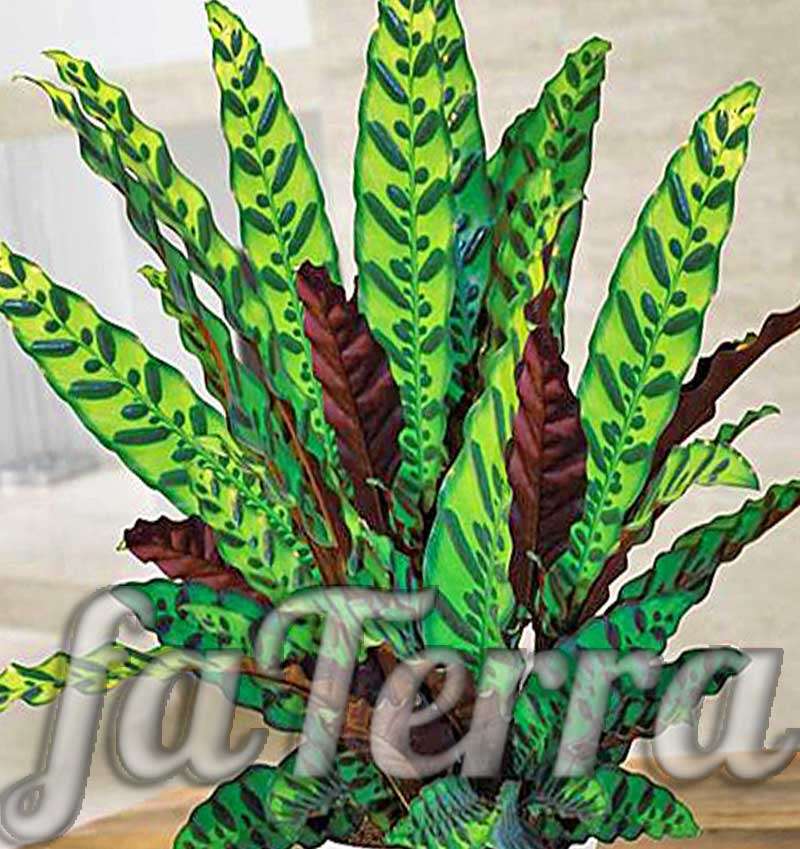
Latin name: Calathea
Category: perennial herbaceous plants
Native to: tropical forests of South and Central America
Calathea (Calathea) - beautiful and delicate, but demanding
Calathea is a very bright and elegant representative of the marantaceae family. It includes 130 plants. Many of them are variegated. They are also called biological chimeras due to the presence of several genotypes in the cells of the leaves. A simpler way to describe them is as variegated plants.
The native habitat of most calathea varieties is the tropical forest areas of South and Central America. Calatheas grow near rivers and lakes. This has determined the plant's attitude towards lighting and high humidity. Calatheas have spread rapidly to all tropical regions of different continents, except Australia.
In the natural environment of the tropical forest, the calathea flower grows in the shade of other trees and constantly turns its large leaves towards the light. Local residents use the large leaves of calathea to cover their homes, and for centuries, they have made baskets from the huge roots of the plant. This is where the name of the genus comes from, which translates from Greek as "basket".
Currently, the cultivation of calathea has moved away from purely practical values and has taken on more aesthetic forms. After all, this is a truly unusual and exotic plant that captivates not only flower lovers but also experienced specialists in this field with its bright foliage.
The prayer plant (Calathea) is, without exaggeration, the most popular indoor plant.
Why is it called a prayer plant? Because in the evening, it folds and raises its leaves upwards, like palms during prayer. In the morning, the leaves return to their normal position, unfolding and opening. According to an old belief, the calathea prays for the well-being, prosperity, and family happiness of the household.
The calathea is a leafy, rhizomatous, stemless, perennial indoor plant. Its height reaches eighty centimeters. The main value of the plant is its original coloring of the leaves with various patterns, which sometimes resemble the feathers of peacocks or other birds from fairy tales. Throughout the year, the calathea grows about six young, long leaves on elongated petioles, which have an oval shape. The calathea blooms in spring or summer. It forms amazing inflorescences of various shades that resemble spikes. The calathea flower has many varieties. And each of them fascinates with its beauty and uniqueness.
Types of Calathea
Calathea Crocata
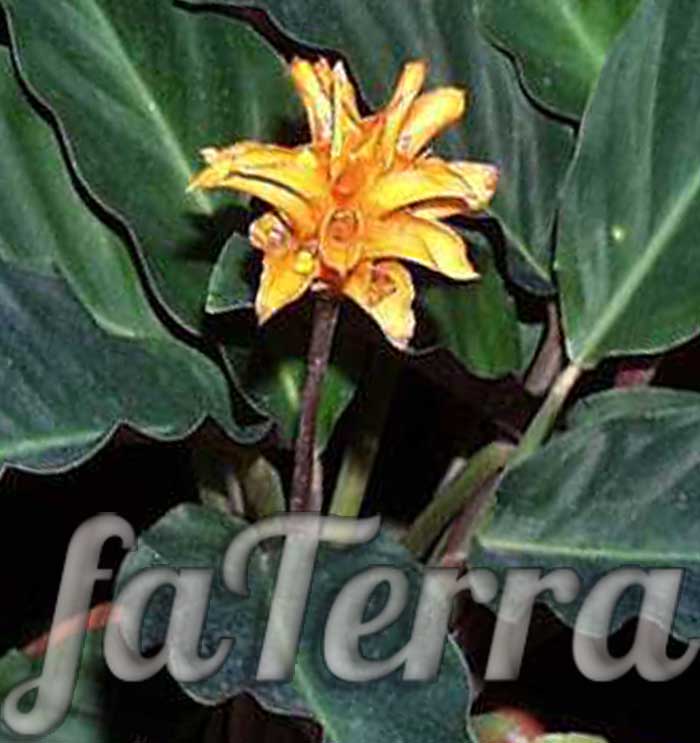
 Calathea Crocata, also known as saffron calathea, is a beauty from the shores of the longest river in the world, the Amazon. It got this name because of the unusual shades of its flowers, which form short, brush-like inflorescences on a high peduncle. These amazing bright yellow, even orange, flowers can fully compete in beauty with its beautiful dark green leaves. Together, they create an amazing picturesque plant that delights with its regular flowering. Achieving this fairytale flowering beauty and enjoying it is possible by following fairly simple rules of cultivation. The saffron calathea needs about 10 hours of light per day, a temperature of about 18°C, and high humidity. As a result, the indoor plant calathea blooms from early spring to late autumn.
Calathea Ornata
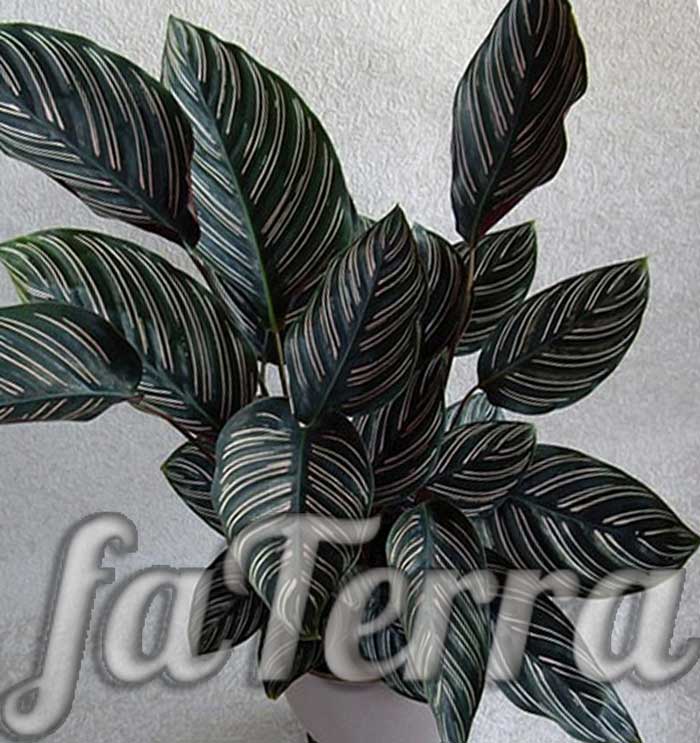
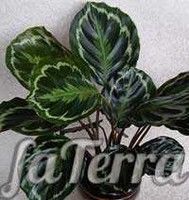 This is a very decorative, low-growing plant. It is native to the humid tropical forests of Colombia.
The elliptical, greenish-yellow leaves are about 20 cm long and 6 cm wide, and are attached to 15-centimeter petioles. The upper surface of the leaves is decorated with pink and silver lateral stripes. The underside of the leaf has a purple-red hue. The inflorescences, resembling a spike, are on a long, up to 30 cm, peduncle, consisting of white or purple flowers.
Calathea warscewiczii
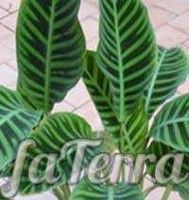 This is a relatively large plant with dense rosettes of velvety, oval, dark green leaves. The upper side of the leaf blade is decorated with a light green pattern along the central vein, resembling a Christmas tree. The underside of the leaf is purple-red. The shoots that appear before flowering require support. The white, pink, or creamy flowers look very beautiful in their spike-like inflorescences.
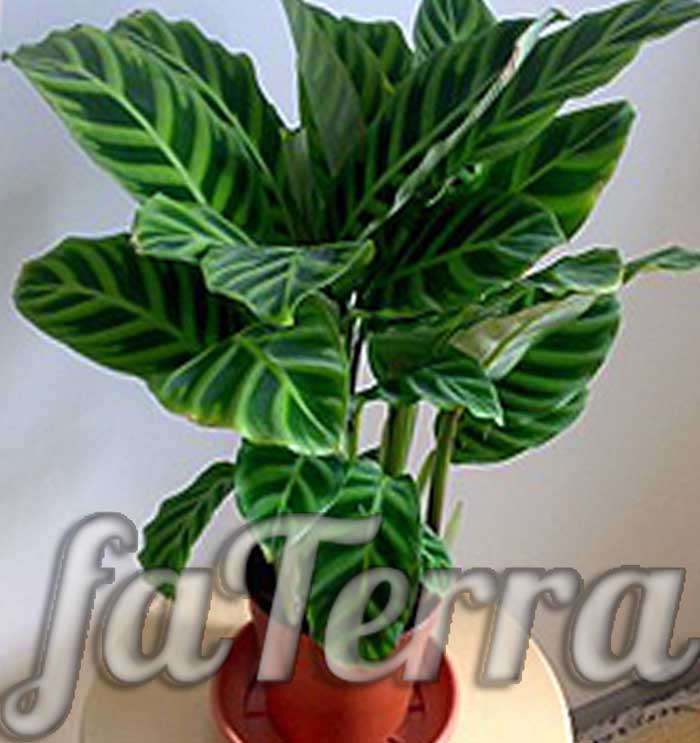
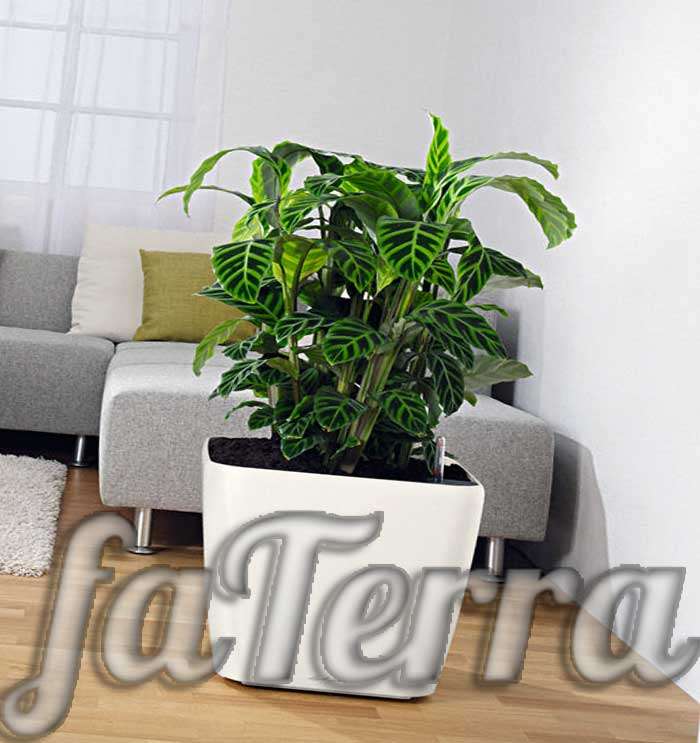
Calathea zebrina or striped calathea
 This is a Brazilian, very decorative tropical plant. It is well adapted to indoor conditions. The height of this beauty reaches 60 cm. The leaves, which are about 40 cm long and 15 cm wide, have an elliptical shape. The upper side of the leaf is dark green, decorated with light feathery stripes, and the underside is red. The white or lilac flowers are collected in dense inflorescences on short pedicels.
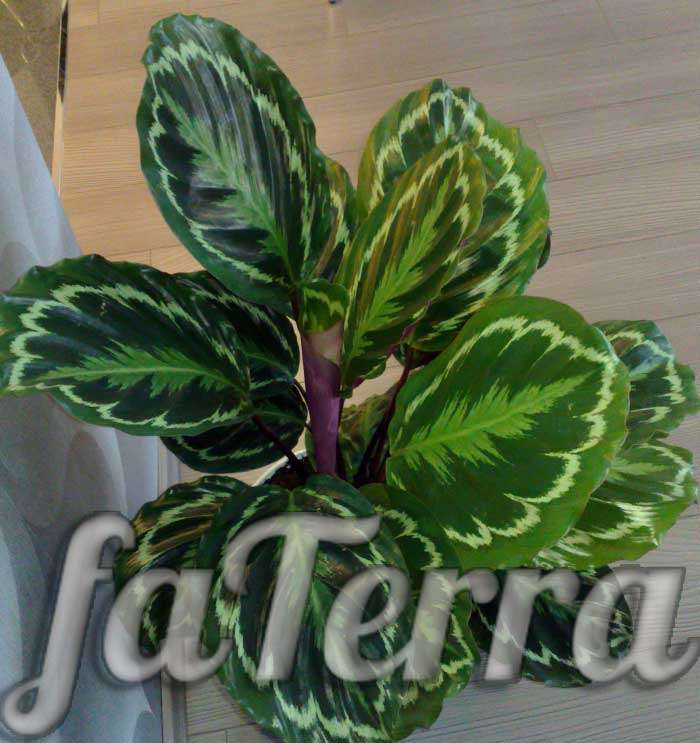
Calathea makoyana
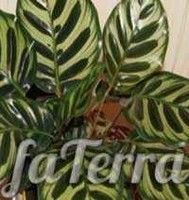 This is a small, up to half a meter tall, decorative plant from the humid forests of Brazil. It is unique because it does not need to be sprayed.
This calathea has large, wide, oval white leaves. There are very beautiful green veins and elongated dark green stripes drawn on them. The underside of the leaf is burgundy, which gives the calathea a special beauty. This beauty is most pronounced in the evening, when the leaves rise upwards and fold, revealing the unique color of the back of the leaf.
Calathea picturata
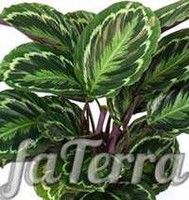 This plant is native to the northwestern part of Brazil. It is demanding of temperature. When growing, it is necessary to maintain a temperature of 16°C, and the root system should be in a warm earthen layer up to 20°C.
The plant reaches a height of 40 cm. The leaves of the calathea are dark green, decorated with silvery veins. The underside of the leaf is purple.
In our region, calathea picturata can only be grown indoors. It needs good lighting and high humidity.
Calathea insignis, also known as lanceolate calathea
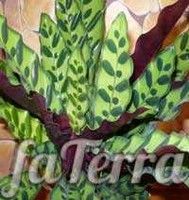 This is the largest of all calatheas, reaching up to 70 cm in height, and it is an undemanding plant. It grows in the tropical forests of South America.
The calathea insignis has bright light green leaves, up to 50 cm long, with original patterns in the form of small and large dark spots. The underside of the leaf is purple. The leaves are directed vertically upwards. In natural conditions, long peduncles raise small white flowers above the leaves. In indoor conditions, the calathea rarely blooms.
Calathea care at home
Caring for a calathea involves finding a balance of all the plant's needs and consistently maintaining this delicate balance. Calathea is a capricious and demanding plant, like all tropical plants, it loves light and warmth. With proper and careful care, the calathea will delight you with its beauty. It will beautifully decorate an office, apartment, or any other room.
Now, let's consider step by step how to care for a calathea at home. Let's try to break it down into simple steps.
Choosing a location
Like most indoor plants, calathea does not tolerate direct sunlight, which can cause the leaves to curl and lose their bright color. The best place for it is a shaded area, but it also needs good lighting. If it is in a dark place, the calathea will not grow lush and large. The most suitable places are east or west-facing windows. It will also grow well in the depths of the room, but you need to use daylight lamps for at least 12 hours a day. The calathea can also beautifully decorate a bathroom with appropriate humidity.
Temperature regime
The tropical calathea loves warmth and cannot tolerate temperature fluctuations and drafts, which negatively affect the growth of the plant. In summer, the ideal temperature for it is 21-24°C, and in winter, it is 16-20°C.
Watering
The calathea needs to be watered with warm, soft water as the soil dries out. In summer, watering is more frequent, and in winter, it is less frequent, as the plant consumes less water. It is best to water using a watering can. Make sure that water does not get on the rosette and leaves of the plant, as this can cause root rot.
Air humidity
The calathea loves very humid air, up to 90%. The calathea is more demanding of humidity than sanchezia. It needs to be regularly sprayed or the leaves should be wiped with a damp sponge. For calatheas with velvety leaves, it is better to moisten the drainage tray with wet gravel or peat. Artificial humidifiers can also be used to maintain humidity.
Soil
The calathea needs light, loose, slightly acidic soil. The composition is approximately as follows: leaf soil, peat, and coarse sand. You can add small pieces of pine bark, and it is also useful to add wood ash. You can buy a soil mixture for calatheas or azaleas.
Fertilizing
The calathea should be fertilized starting in spring and continuing until the dormant period, every fifteen days. It is best to use complex fertilizers for decorative-leafy plants. The dosage should be reduced by half. It is necessary to exclude the use of nitrogen and calcium supplements.
Calathea transplant
The calathea does not like frequent transplants. However, young plants should be transplanted into a slightly larger pot in the spring. The soil should not be disturbed too much, so as not to harm the roots. A drainage layer is necessary. It is also good to cover the roots with moist moss.
Calathea propagation
The calathea can be propagated in spring by dividing the bush during transplantation. The parts of the plant should not be too small. Plant them in a light mixture, provide high humidity and greenhouse conditions. Wait for the growth of new leaves.
Stem cuttings up to 15 cm long can also be used for propagation.
The calathea can also be propagated by seeds. This is a more time-consuming method of propagation. Spread the seeds on moist soil and cover with glass. When the sprouted seeds grow, plant them in the soil, covering the roots with 1 cm of soil. Then, periodically ventilate the seedlings and remove the glass for a short time.
Pests and diseases
The most dangerous pests for the calathea are:
- Scale insects - brown spots appear on the leaves and stem, which suck the sap. The leaves fade and dry out, and the plant looks sickly. Treat the plant with a soapy solution. If this is not enough, use an insecticide.
- Spider mites - the calathea feels bad and its growth slows down. Treat the plant with an insecticide.
Possible problems when growing
When caring for a calathea, questions may arise that need to be addressed immediately.
- If the leaves of the calathea are drying out, it may be due to insufficient watering, drafts, or spider mites. If only the tips of the leaves are drying out, it may be due to low humidity. It is necessary to spray the calathea more often.
- The leaves of the calathea curl up due to intense lighting or drafts.
- If the leaves of the calathea turn yellow, it may be due to over-fertilization or improper watering. Yellowing of the leaves can also occur due to low temperatures.
- If brown spots appear on the leaves, it may be due to sunburn or waterlogging of the soil.
When caring for and growing a calathea, it is important to remember that this plant is very demanding. To avoid problems, it is necessary to consistently follow the rules of care and cultivation. This is not difficult. With love and care, the plant will look beautiful and delight you with its beauty and charm.



Write comments
Comments