



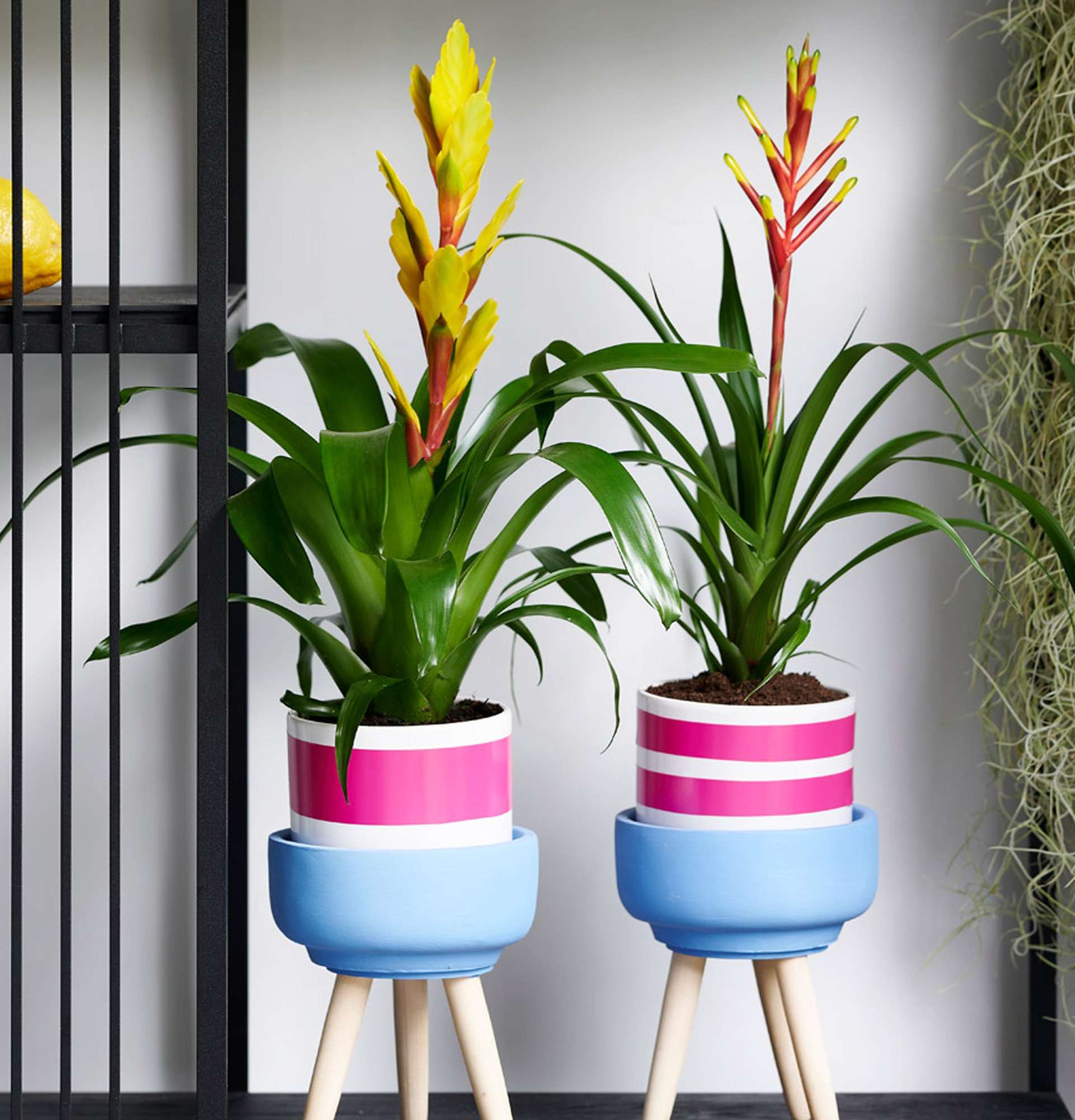
Latin name: Bromelia
Category: epiphytic herbaceous plants
Origin: tropics and subtropics of Latin America
Tolerant, hardy, and dazzling bromeliad
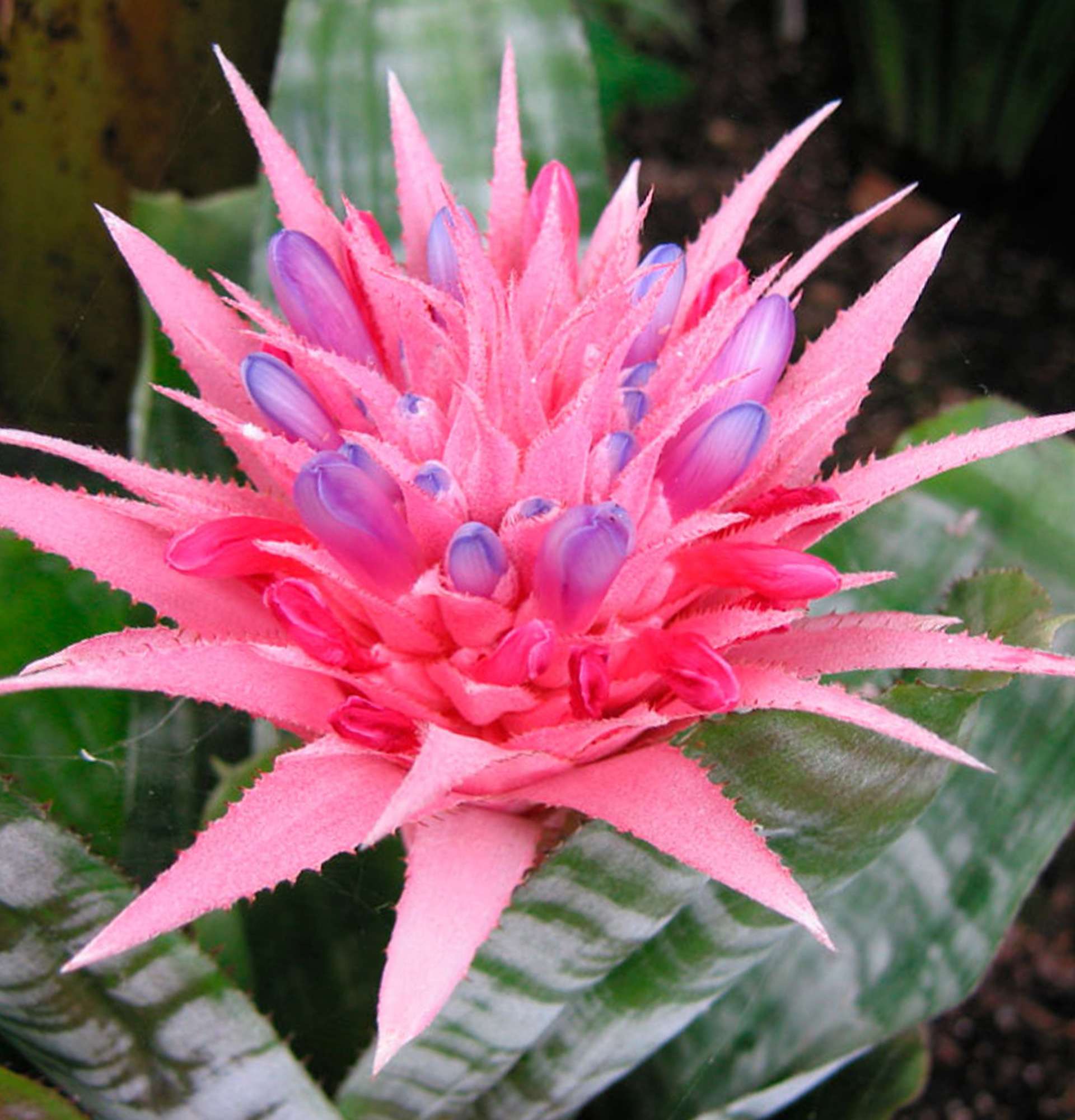
Bromelia is a genus of very beautiful tropical epiphytic plants that can live on trees, shrubs, and even terrestrial specimens. About fifty different species of beautifully flowering perennials adorn the vast Bromeliaceae family.
The beautiful bromeliad was discovered by a traveler, a botanist from France, Charles Plumier, who named it after the Swedish biologist and herbalist Olaf Bromelius.
Bromelia came to us from the tropical, subtropical forests, and even rocky areas of the American continent. Here, in the environment of pristine nature, some of its varieties can even exceed three meters in height.
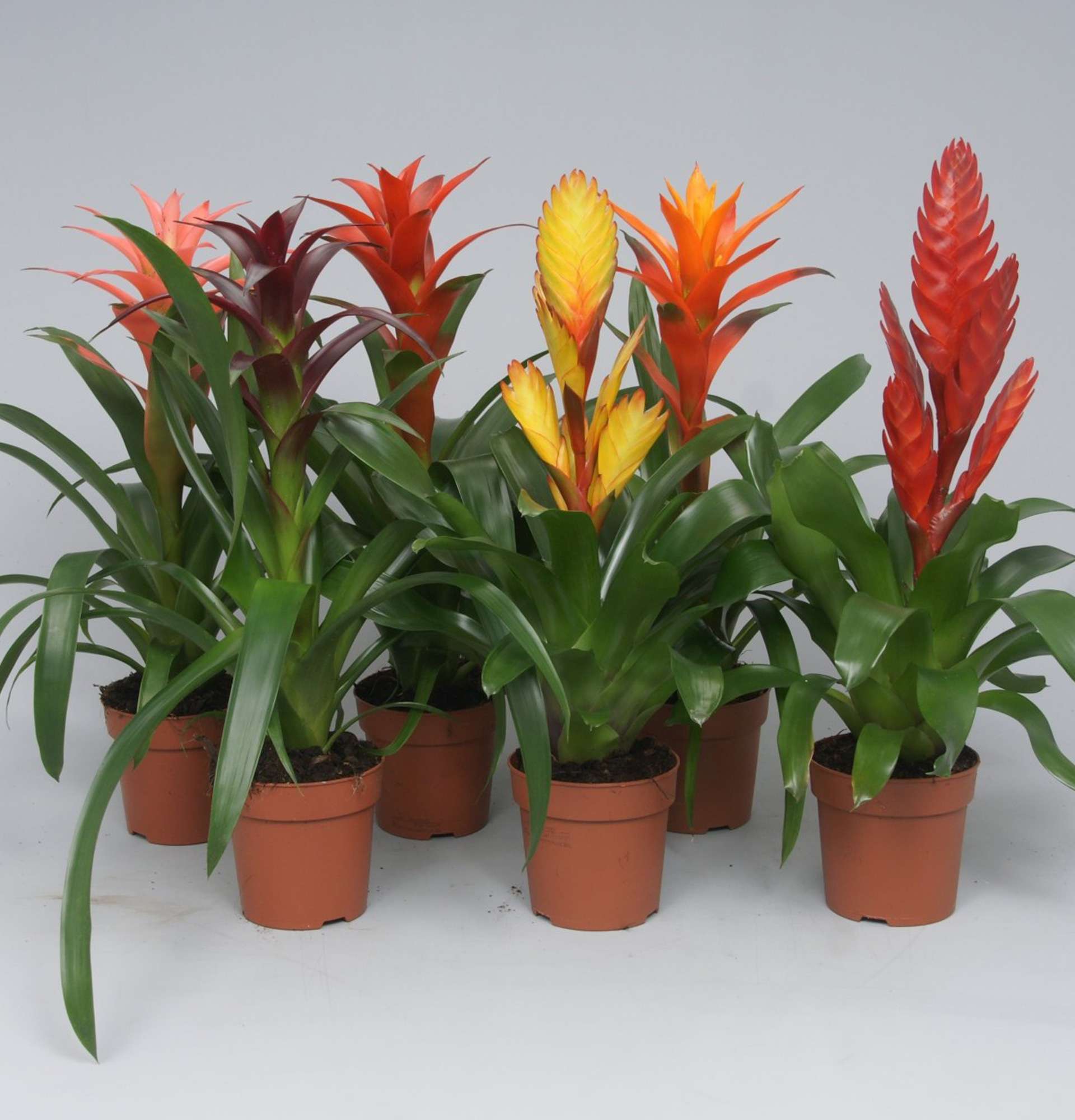
Different varieties have their own distinctive features, expressed in the rigid rosettes of leaves and the different colors of their inflorescences.
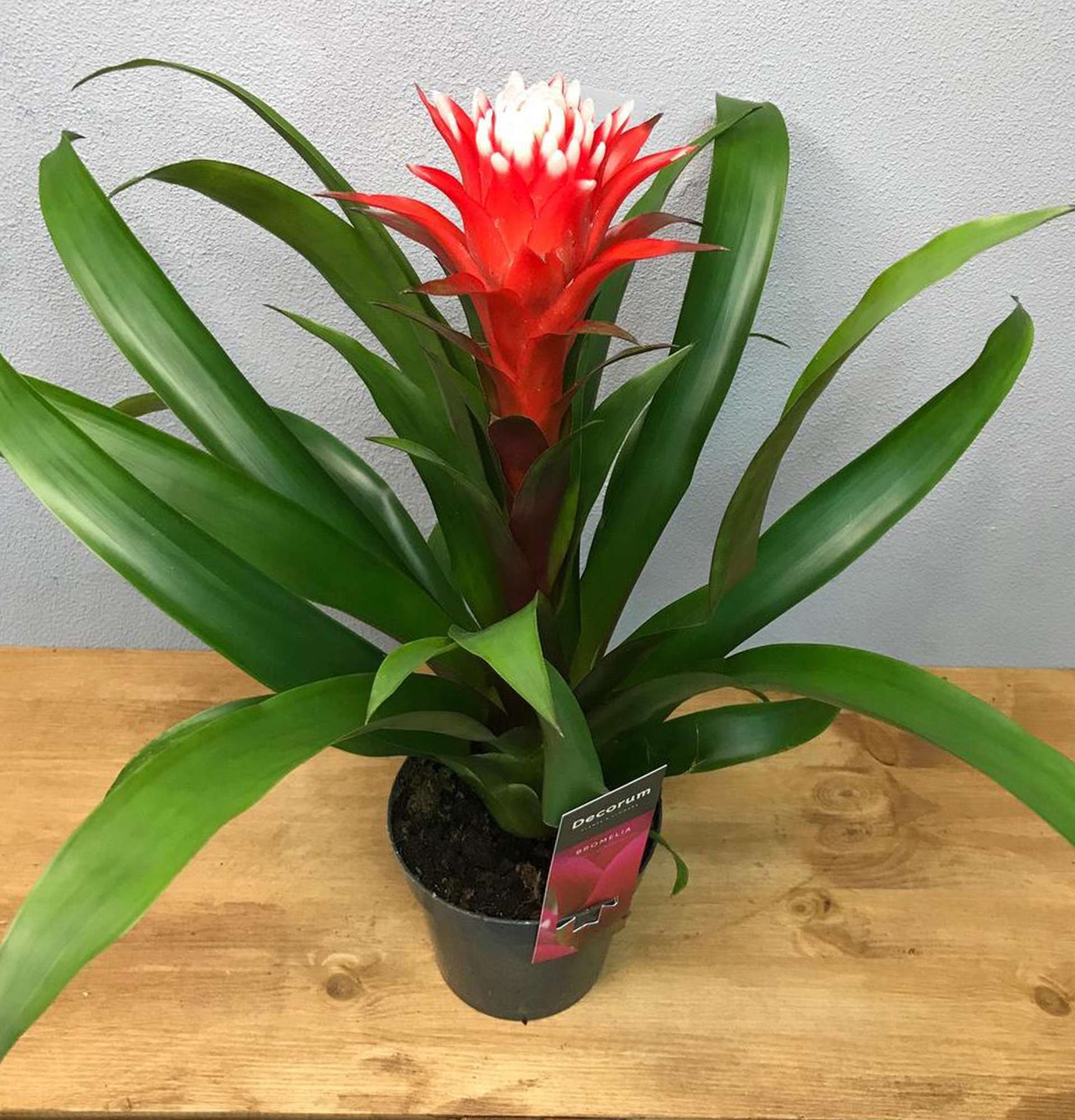
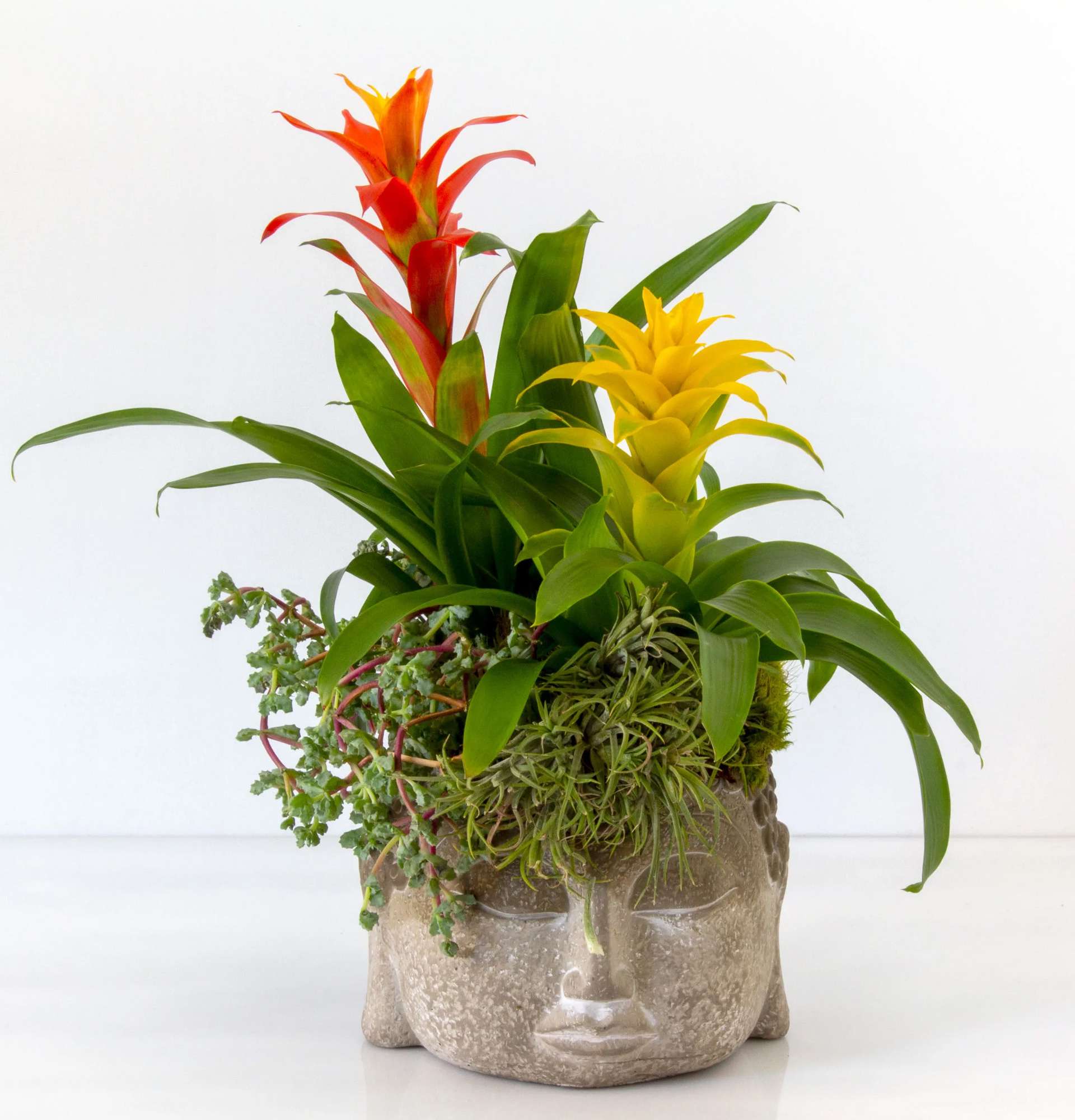
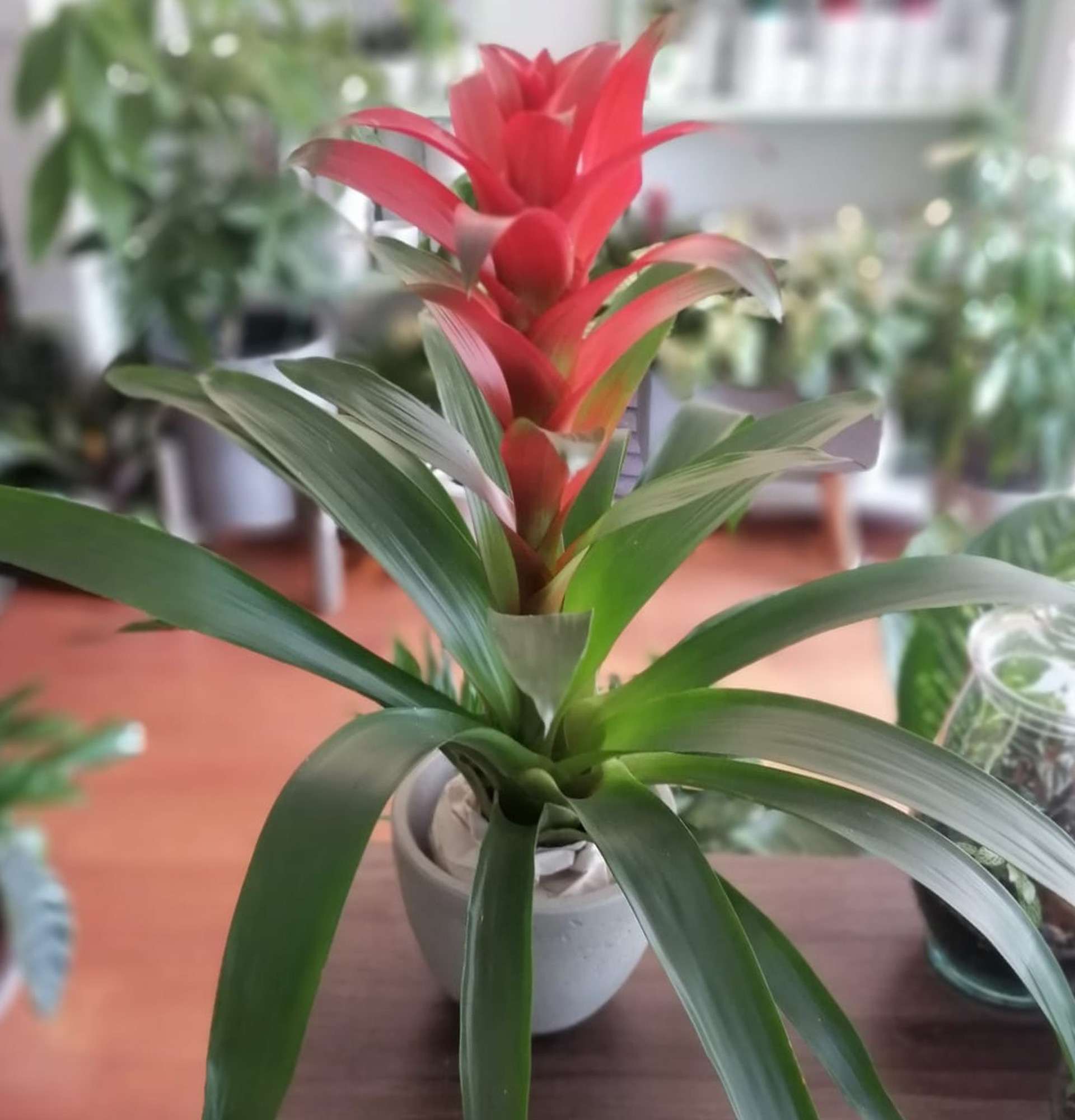
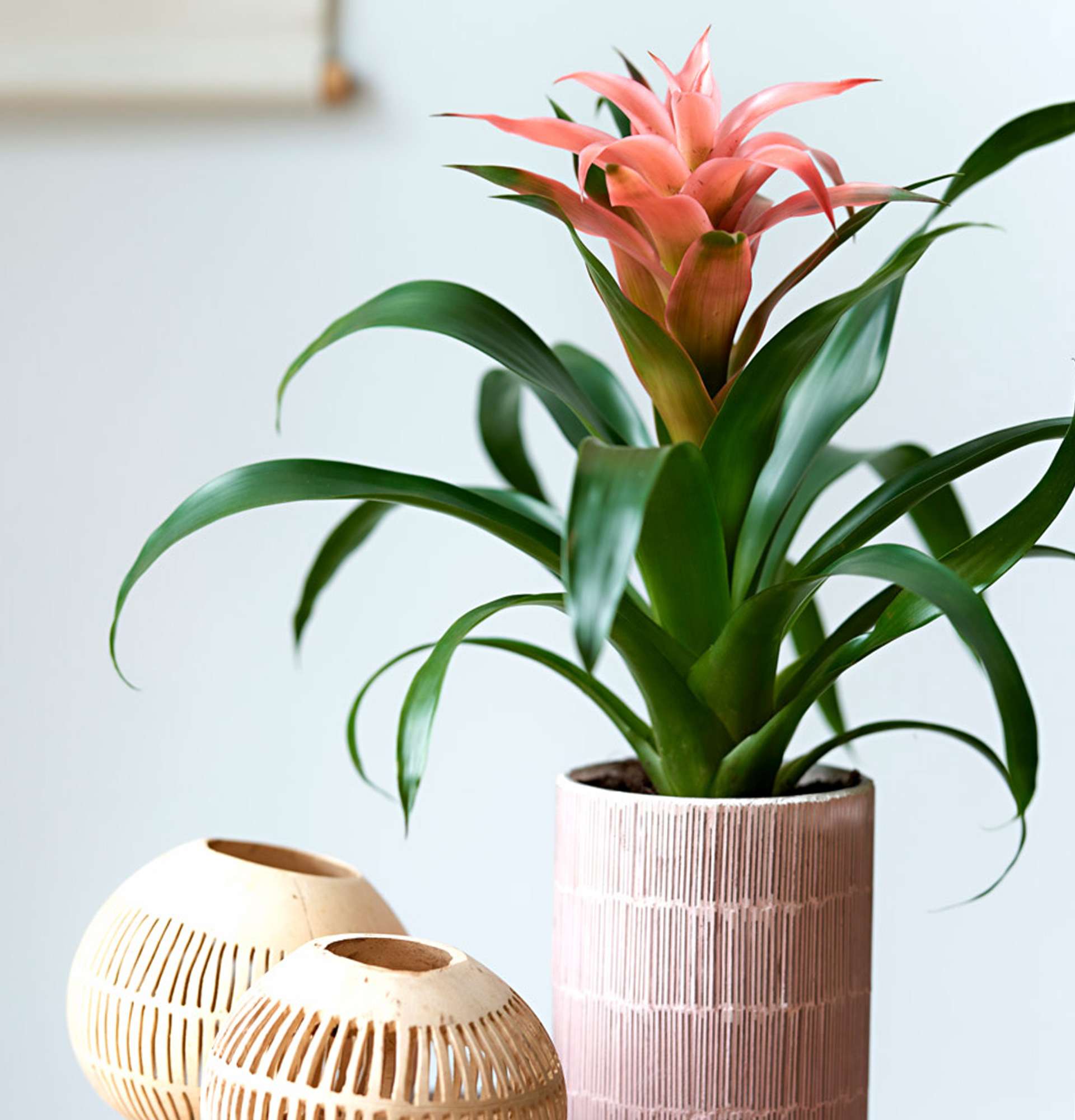
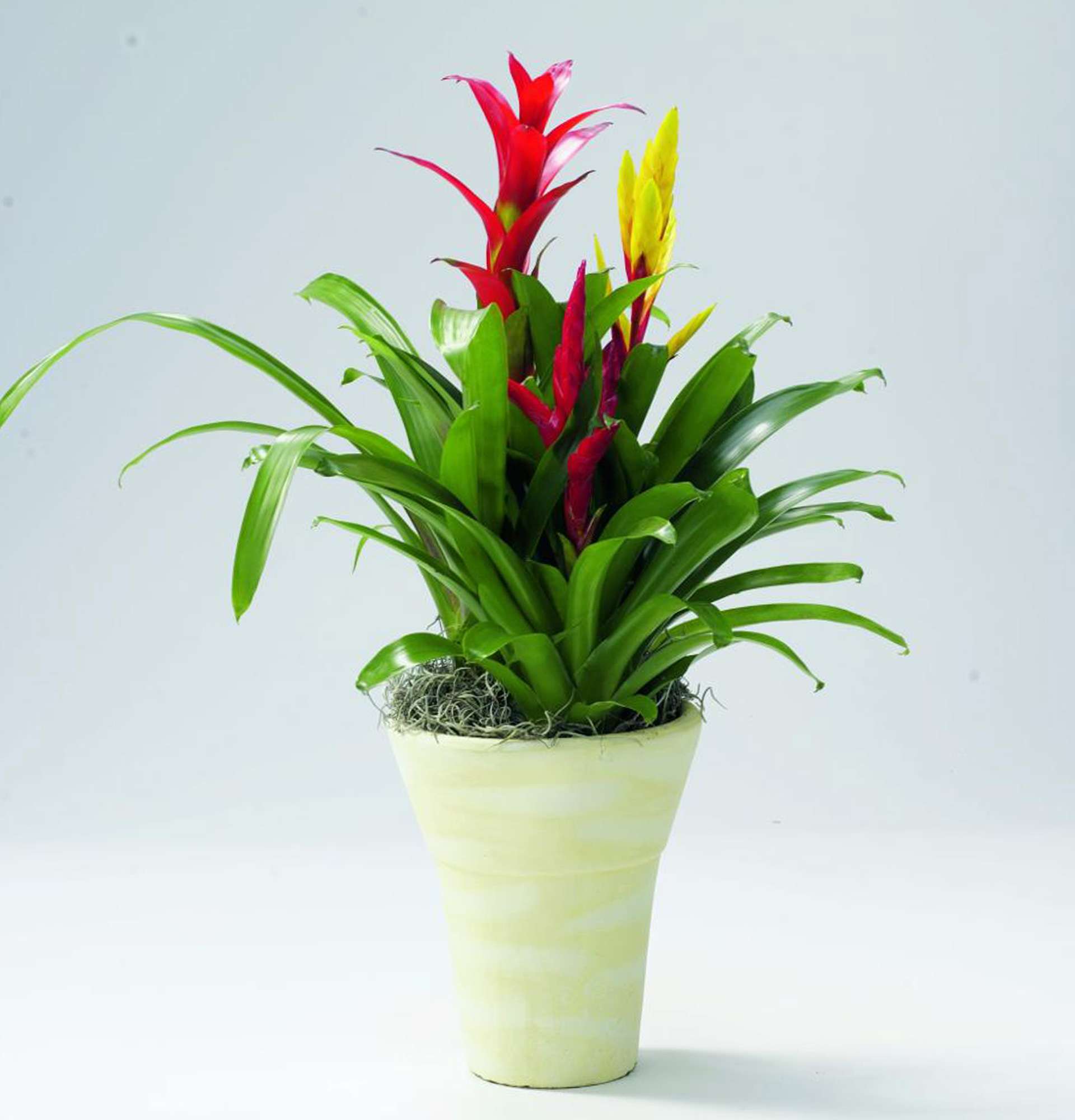
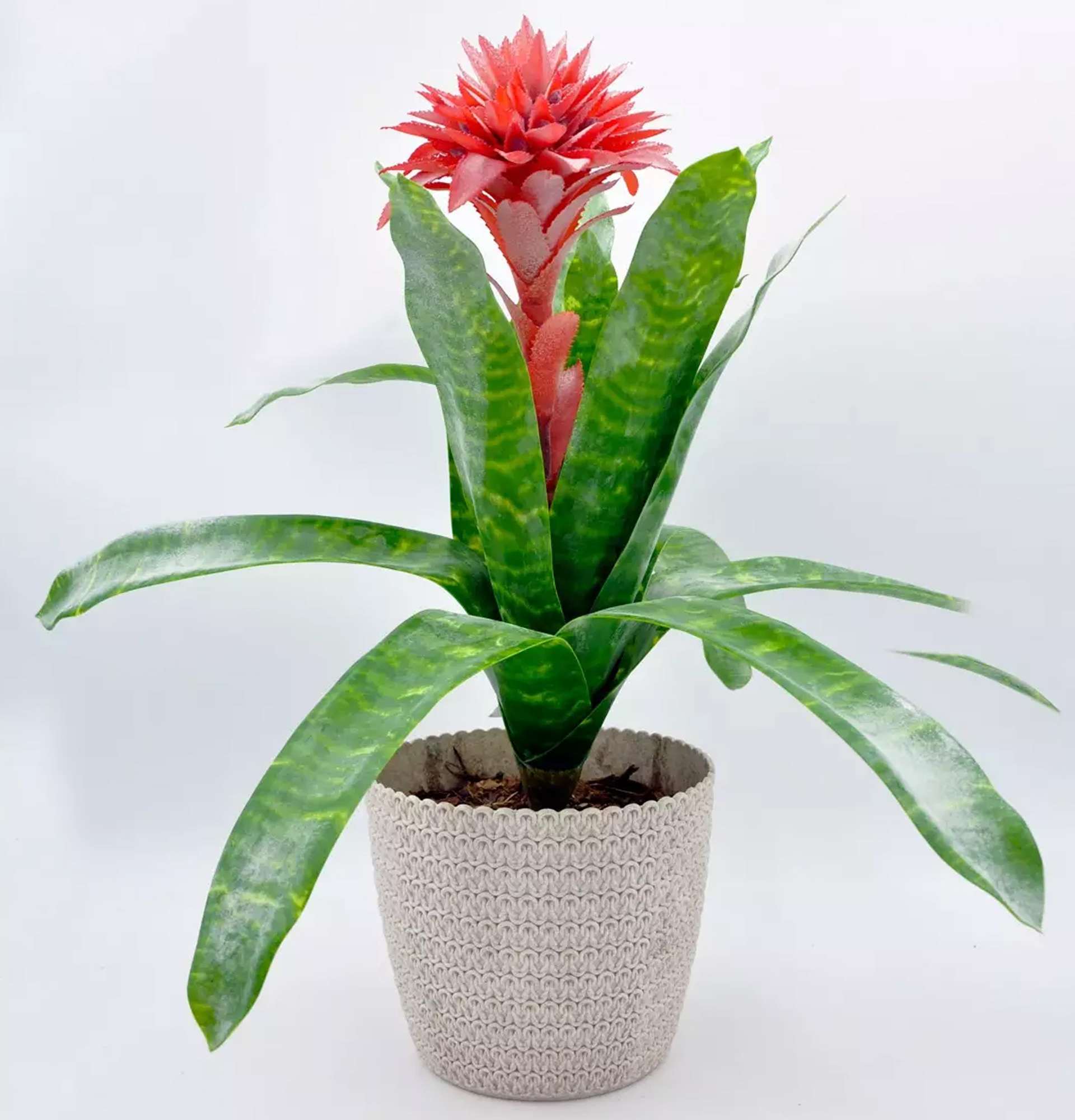
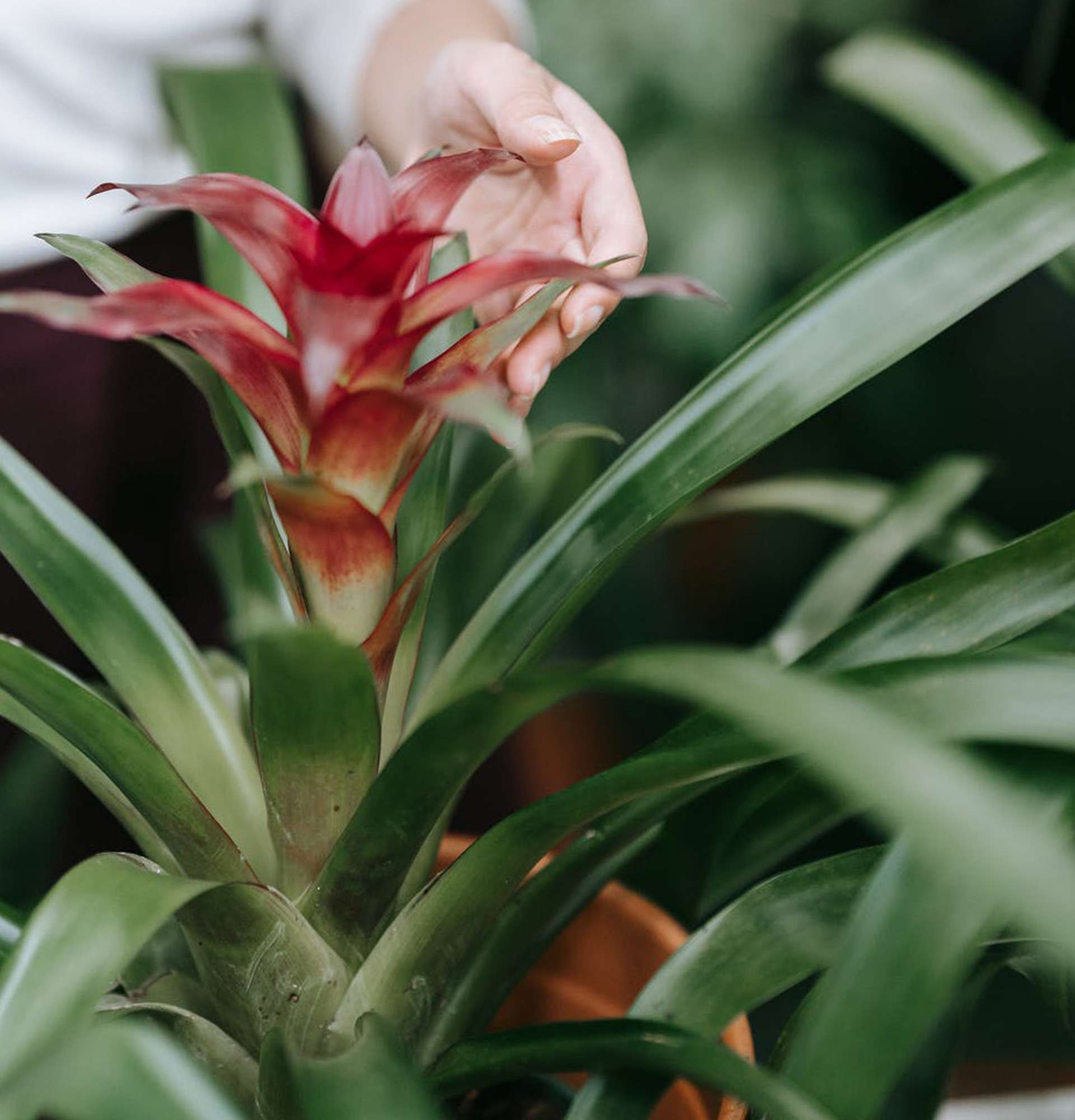
Bromelia attracts attention with its decorative qualities. Flower lovers admire its bright appearance and absolute unpretentiousness. More and more often, bromelia becomes the most original potted flower for growing in offices, apartments, and recreation areas. Indoor flowers in the interior have a beneficial and calming effect on the energy of personal space. As a result, mood improves and productivity increases. A long-blooming bromeliad becomes a decoration of the house. It will gladly enliven the atmosphere of a bright bathroom. Each species of this plant is original and unique in its own way.
Varieties of bromeliad
Bromelia agavifolia Brongn
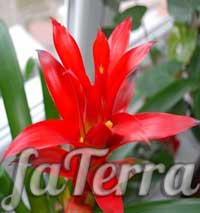 The territory of the Antilles is the native habitat of this species. The succulent, perennial, terrestrial plant has solid, prickly, fleshy, straight leaves. A beautiful, goblet-shaped rosette is the center from which the flower stalk and beautiful inflorescence, made up of small pale pink flowers, begin to grow.
Bromelia humilis
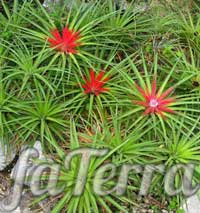 This variety is considered one of the most resistant bromeliads. It pleases the eye with a voluminous, wide rosette, the diameter of which is more than one meter. It consists of red-orange leaves, which turn yellow with age, fade in the sun, and then acquire a dark green color.
Bromelia pinguin
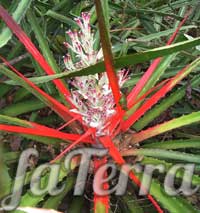 This is a fruitful species of bromeliad. The plant's habitat is Mexico, Costa Rica, Ecuador, and Venezuela. The subtropics, dry thickets, and slopes at an altitude of seven hundred and eighty meters above sea level are a very favorable climate for the terrestrial bromelia pinguin. Its large, dense, spreading rosette, consisting of numerous narrow leaves, reaches a height of one and a half meters. Here, not only do they admire the beauty of this flowering plant from March to July, but they also enjoy its fruits.
Bromelia serra
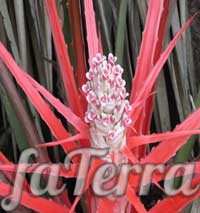 Native to Argentina. It has beautiful red, spiky leaves. Local craftsmen have found useful applications for this variety. The leaf plates of Bromelia serra are an excellent material for making high-quality fiber, from which they weave original bags, ponchos, fishing nets, ropes, and other types of clothing used in everyday life.
Bromelia carlatina
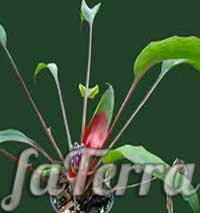 This variety is famous for its very wide leaves. Young leaves are bright red. After the flowering process, the color of the leaves also changes, becoming green.
Bromelia alsodes
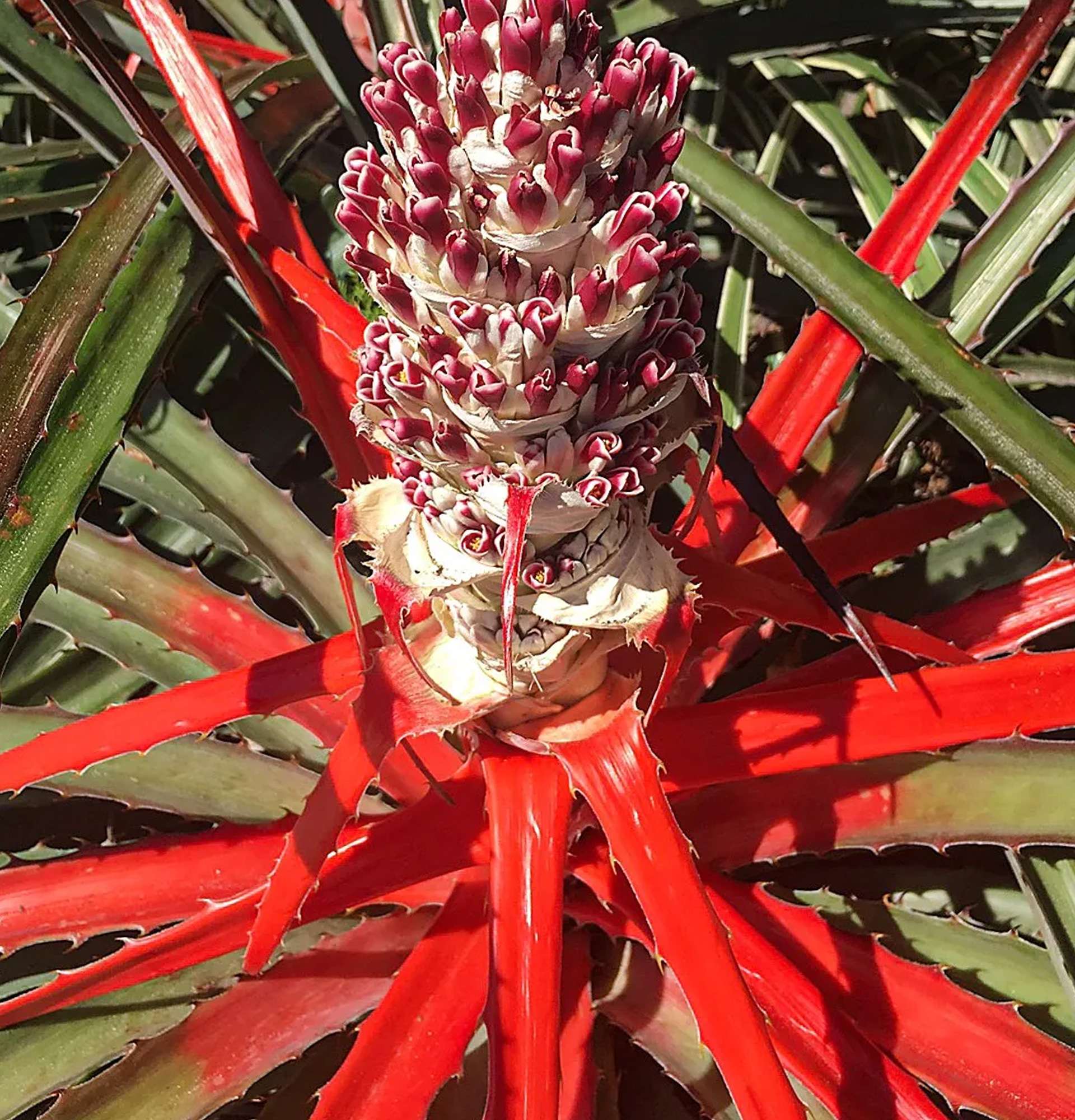
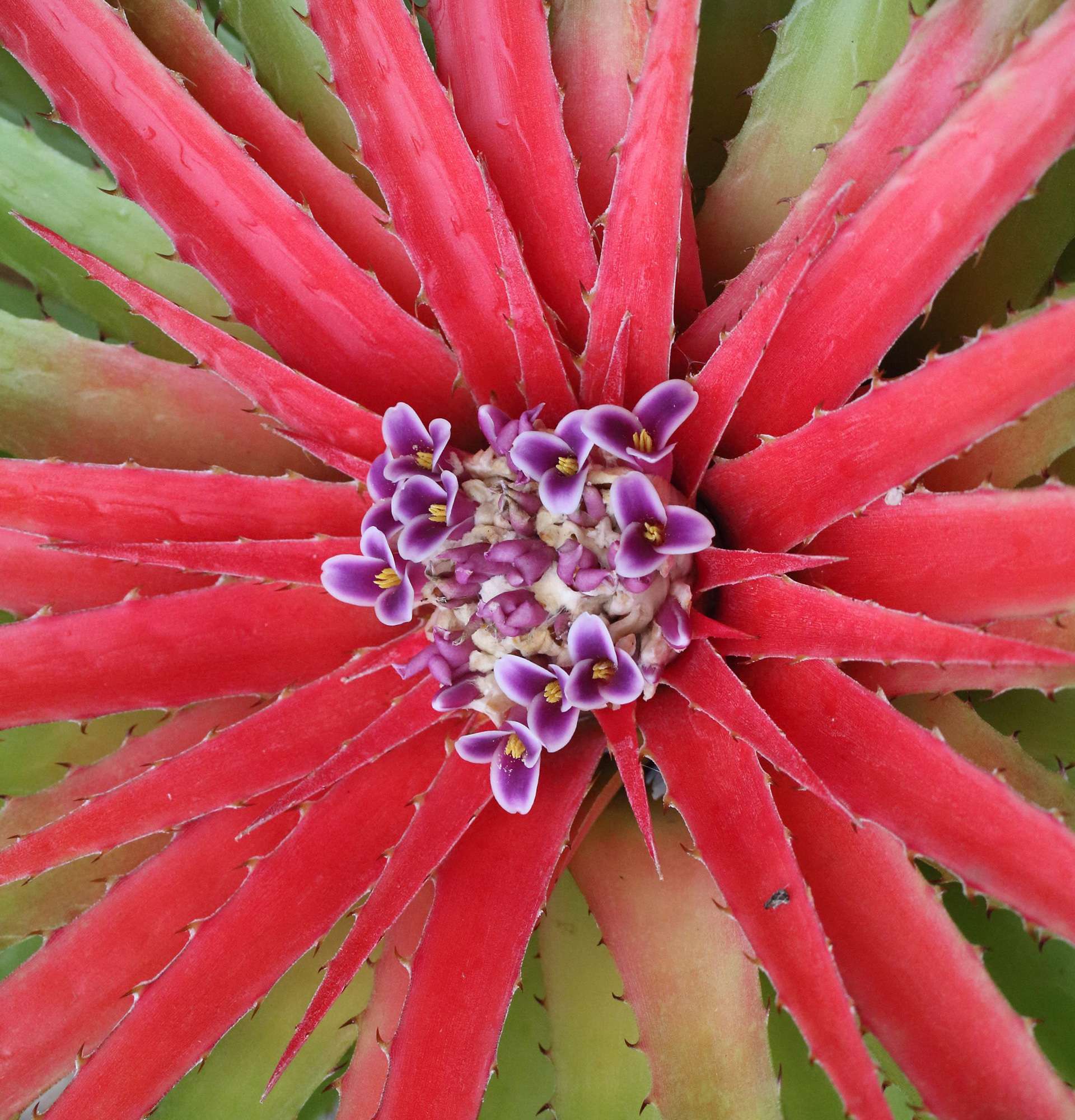
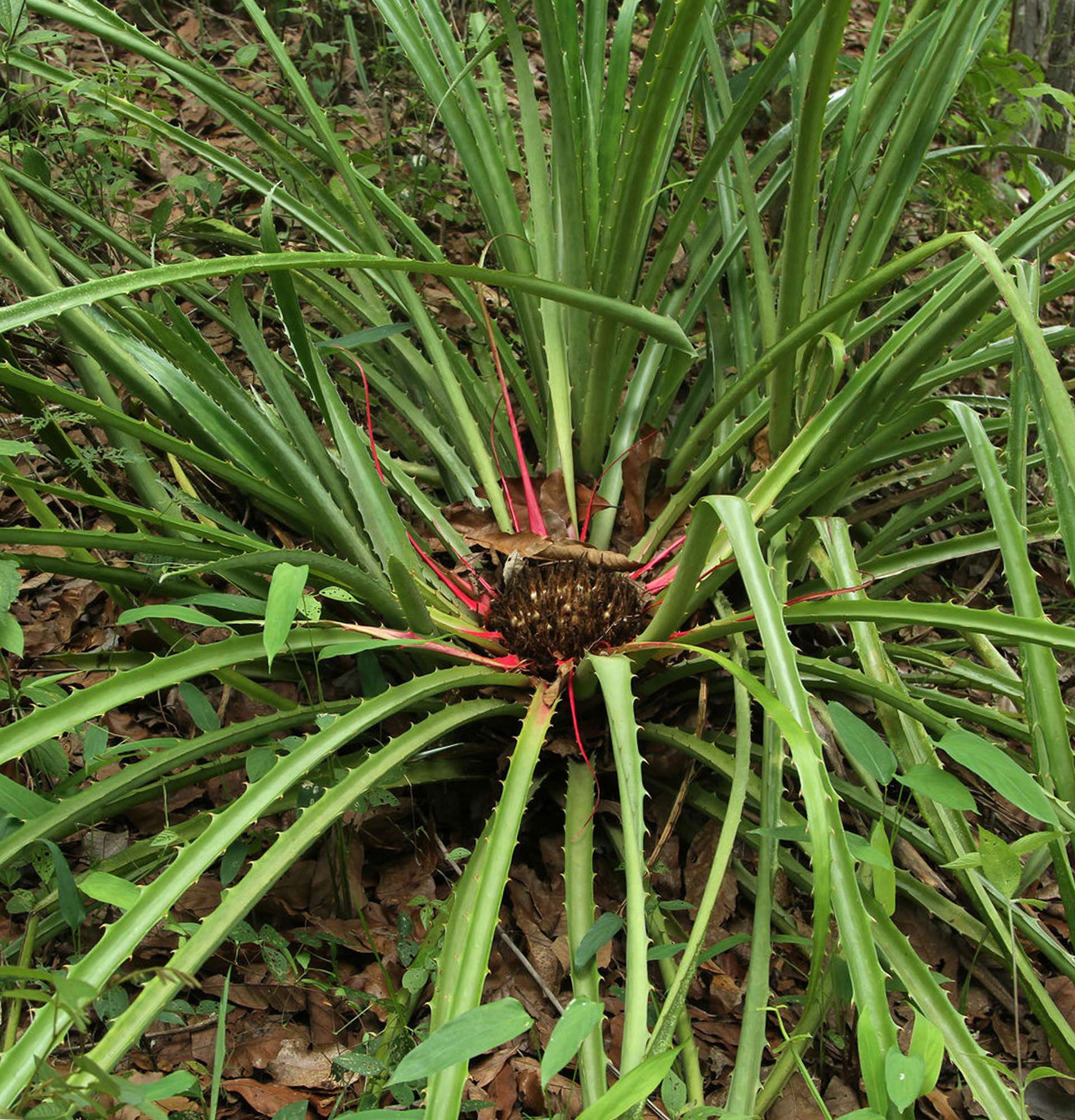
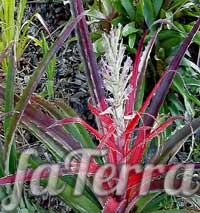 A variety with narrow, prickly leaves with densely arranged sharp thorns. The leaves that grow on top are red, which is in sharp contrast to the lower ones, which are green. Bromelia alsodes blooms with small purple flowers, which are protected by whitish-green bracts that tightly surround the flower tube.
Bromelia alta
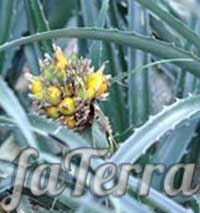 The native areas are Suriname and Guyana. A prickly, bushy succulent with narrow green leaves. The plant blooms with small purple or blue flowers, which turn into yellow and orange fruits.
Bromelia villossa
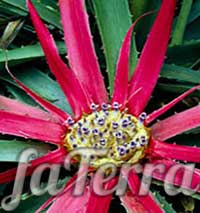 A beautiful Bolivian plant with red, very prickly leaf plates.
Bromelia care in the home
The ideal option for improving and constantly maintaining the ideal atmosphere in an apartment and in office premises is to purchase a beautiful indoor bromeliad. It is hardy and unique in decorating the room, has a long flowering period, and will be the best decoration for the windowsill. To ensure the well-being of the exotic plant, it is necessary to fulfill all the necessary conditions for its maintenance.
Choosing a place and lighting
It loves bright sunlight, with shading at noon. This can be achieved by placing the plant in a pot on a west- or east-facing windowsill. In winter, the lack of light can be compensated for with fluorescent lamps.
Temperature regime and air humidity
Bromelia, which loves warmth, will feel good at a difference in room temperatures of 17-25°C. The lowest permissible temperature is 12°C. Bromelia will bloom beautifully and for a long time at daytime temperatures of 27°C and 17°C at night. Sharp changes do not particularly harm the plant, but drafts are undesirable. Bromelia loves fresh air very much. In the warm season, it is best to place the plant on a balcony, veranda, or in the garden.
High relative air humidity of more than 70% is important for bromelia. This humidity can be achieved by regularly spraying the plant daily. It is necessary to move the plant away from the heating radiator and place it in a tray with moistened expanded clay. The best option for maintaining optimal air humidity is a flower pot with automatic watering.
Watering
Soft water without lime impurities, not salty, and at room temperature is recommended for watering. Water the plant directly into the rosette, which is the main feeder of the plant, and not the roots. The soil on top should also be moist.
It is necessary to avoid waterlogging in the pot.
Soil and feeding
The soil mixture for bromelia can have the following composition: leaf, compost, peat soil, sand (2:1:1:0.5). You can also use a substrate for orchids.
Liquid mineral fertilizers, without calcium and nitrogen, will be optimal for bromelia during the flowering period. The interval is 15 days. The concentration of the preparation is reduced by half to avoid overfeeding the plant, and is combined with watering.
Bromelia propagation and transplanting
Bromelia can be propagated by seeds or by daughter shoots, called "kikis". The first method is difficult and not very relevant. The offspring that appear in parallel with the flowering process of the adult plant are an excellent material for propagating and transplanting bromelia. It is necessary to wait for the end of flowering. Only after the mother plant has dried up, the young shoots that have already formed and have their own roots should be separated. They should be planted in separate pots, the root necks should not be buried in the soil, and good drainage should be placed on the bottom. To stimulate growth, add phosphorus to the soil and create greenhouse conditions.
It is advisable to work with the plant while wearing gloves to avoid getting pricked by the sharp thorns on the leaf plates.
Diseases and pests of bromeliad
Bromelia is very resistant to diseases.
It is necessary to be afraid of fungal diseases - powdery mildew. If this misunderstanding occurs, the plant should be treated with copper sulfate, colloidal sulfur, or copper chloride.
It is necessary to regularly inspect your beautiful bromeliad. Only in this way can you avoid unwanted guests: scale insects, thrips, spider mites, and mealybugs. Chemical preparations can solve the problem with pests.
Problematic moments in cultivation
If the above-described rules and conditions of cultivation are not followed, the plant may have serious problems.
- Light brown spots appear on the leaves - sunburn from direct sunlight.
- The leaf plates turn dark - low temperature and high humidity in the room.
- Bromelia does not bloom - the plant lacks light.
- The plant grows slowly, the leaves wither and turn yellow - excessive watering and overcooling.
Love your bromeliad, because it not only looks beautiful but also has a positive effect on the quality of air in the room, effectively producing oxygen.
Write comments
Comments