



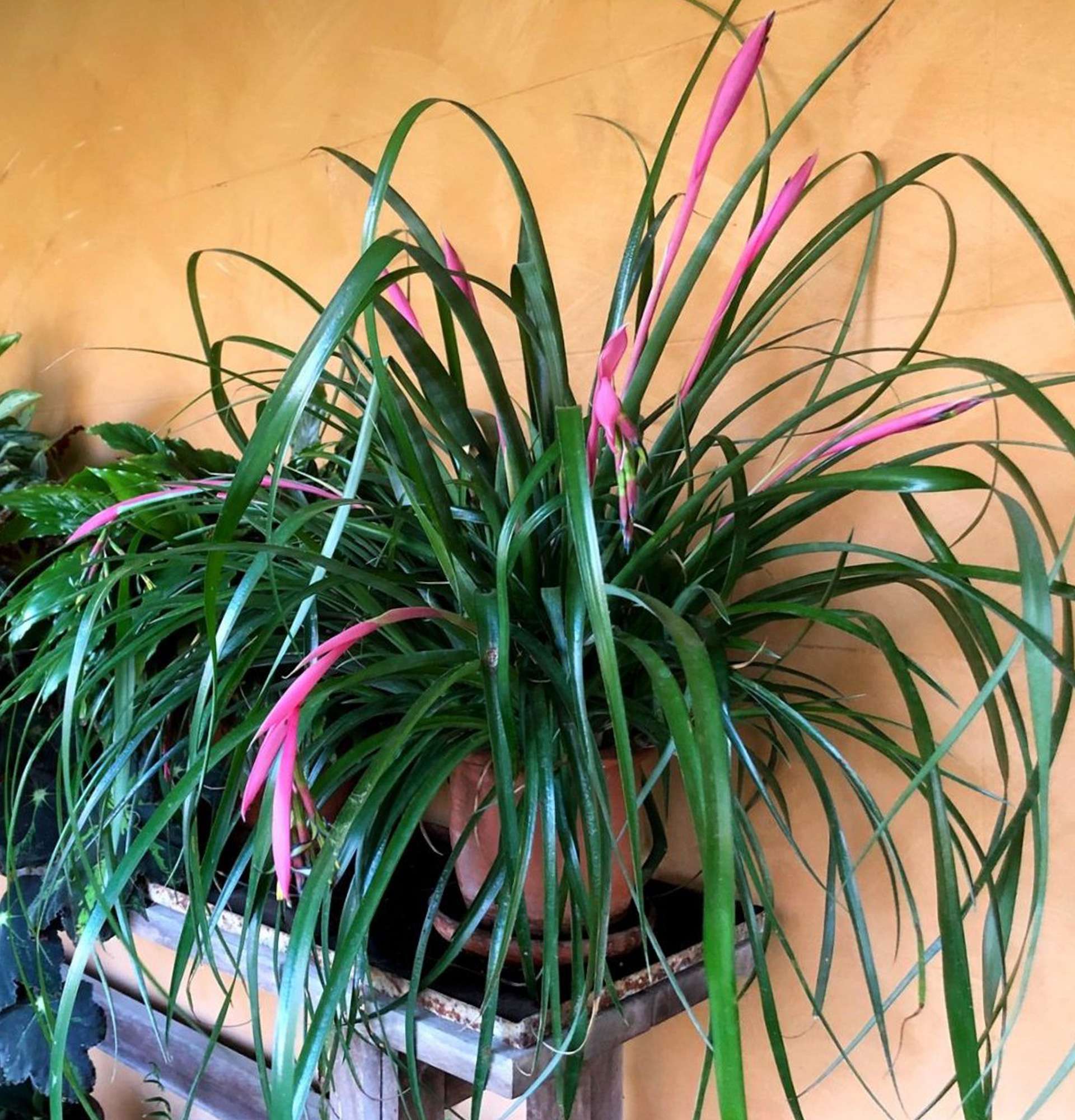
Latin name: Billbergia
Category: epiphytic herbaceous plants
Origin: South and Central America
Queen of flowers - Billbergia
About sixty species of epiphytic herbaceous plants are united in the genus Billbergia, which belongs to the Bromeliaceae family.
The native places of distribution and growth of Billbergia are considered to be the subtropical regions of South and Central America. The plant received its beautiful name in honor of the Swedish botanist, zoologist, and lawyer Gustav Billberg in 1821.
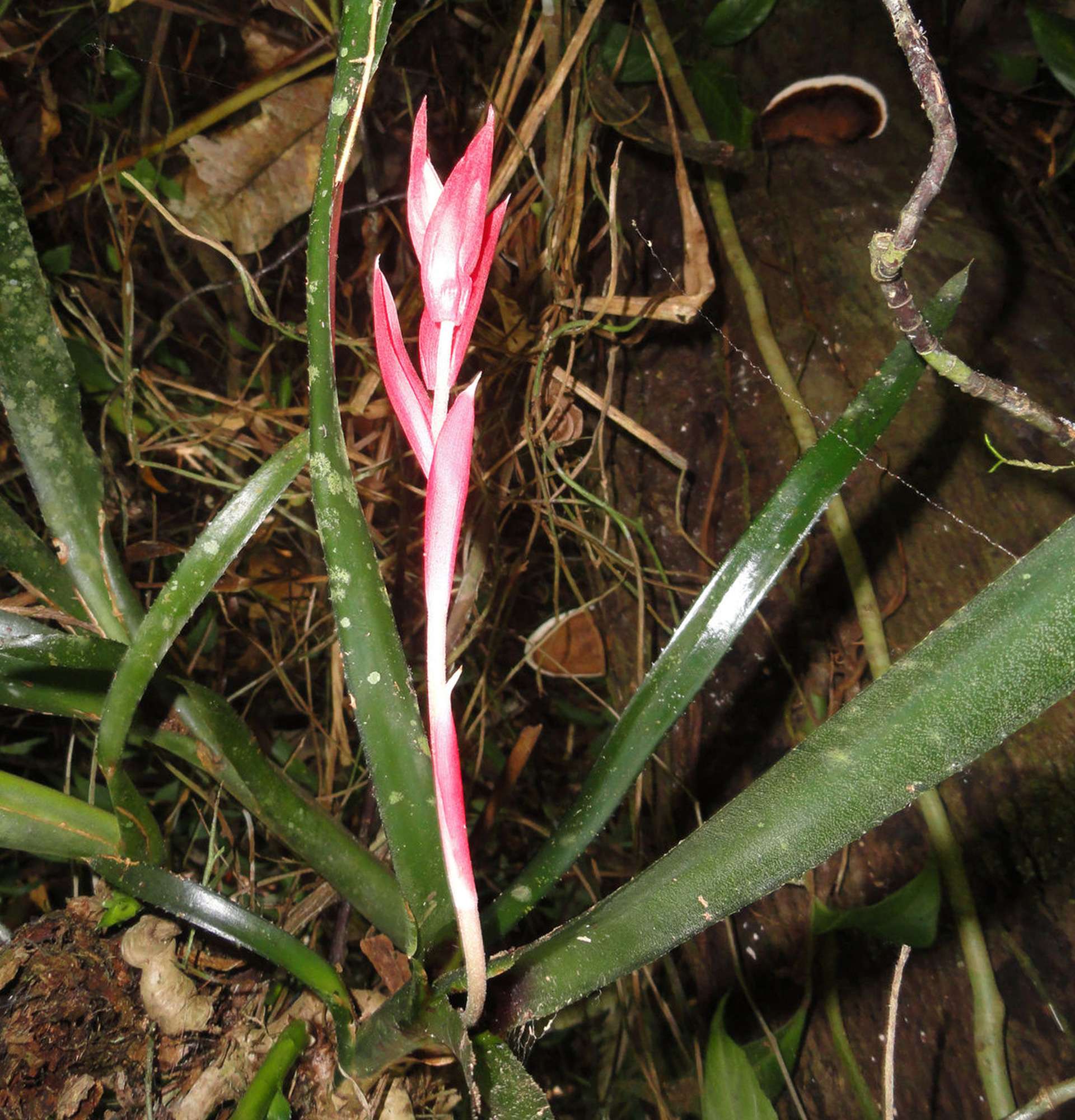
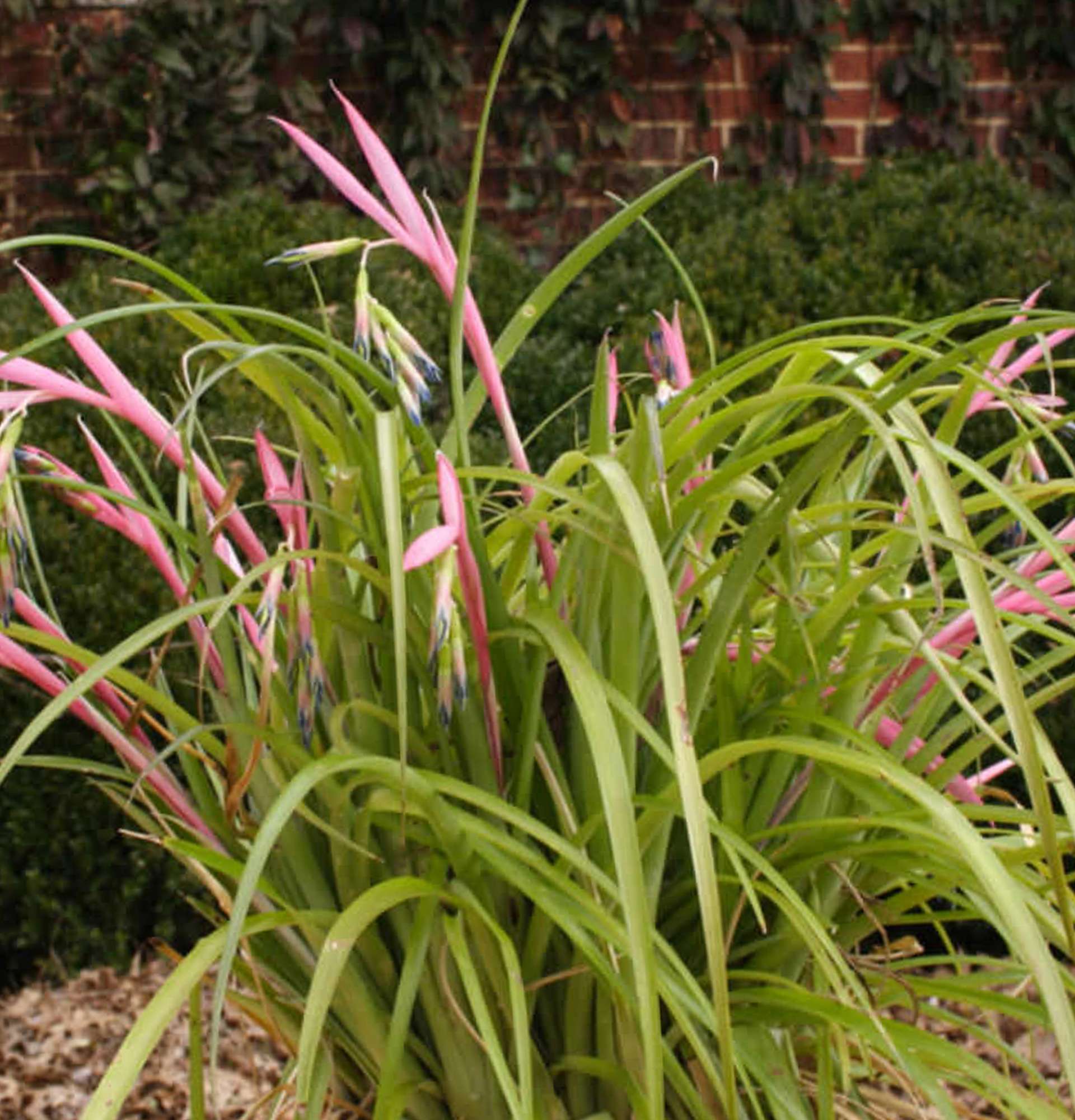
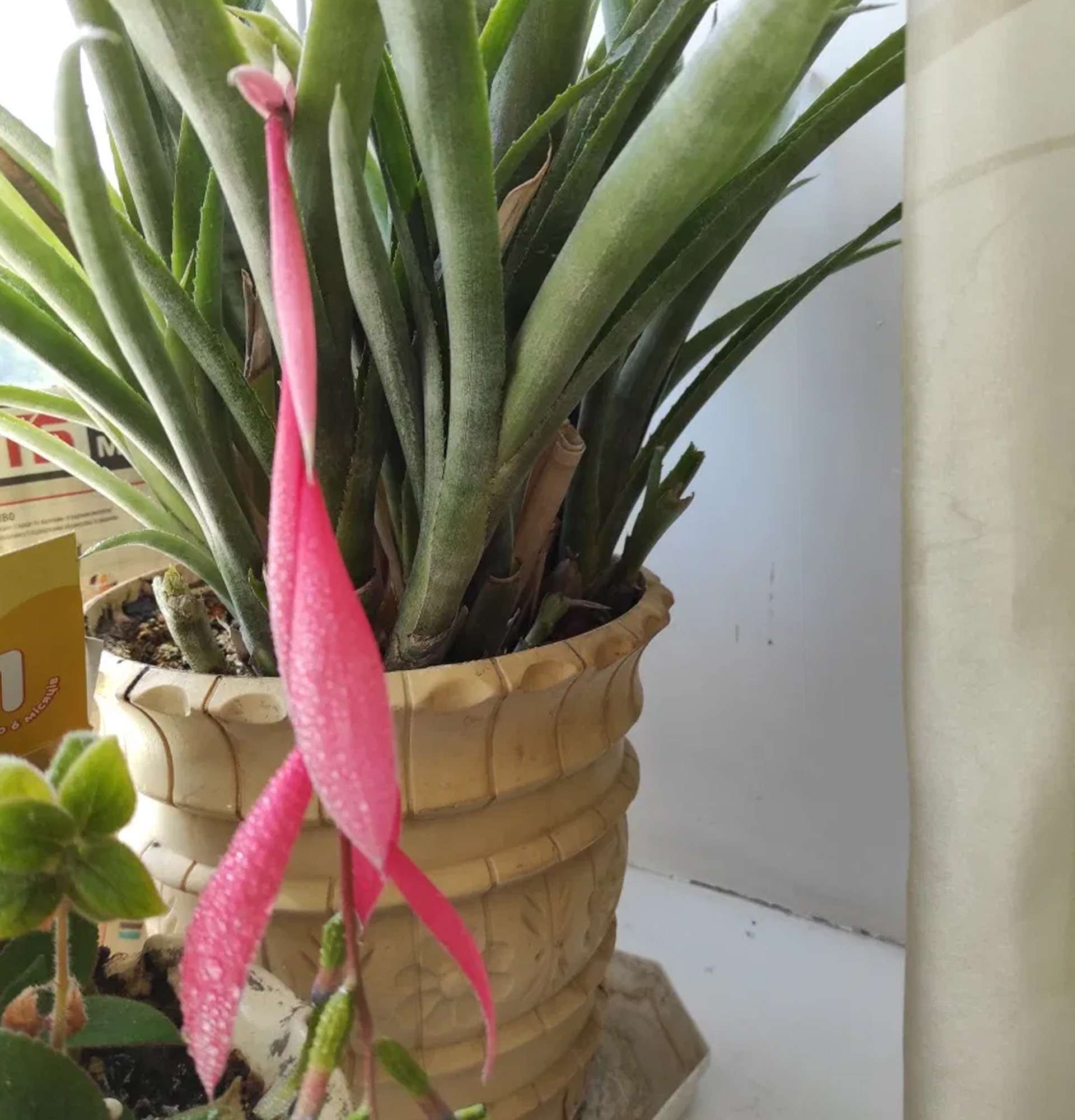
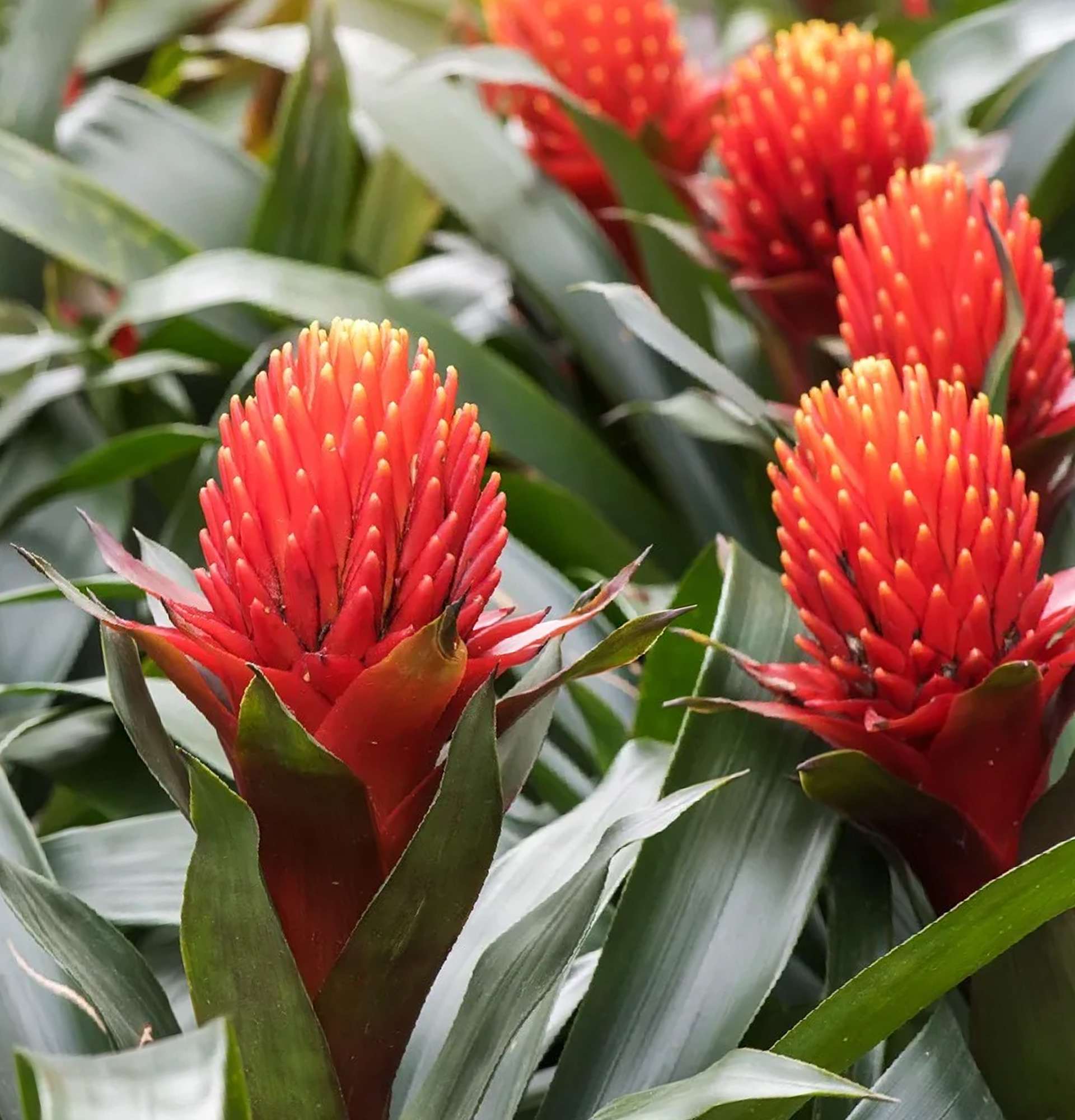
Billbergia has hard, tubular leaves for accumulating moisture, with spiky edges. These long leaves are gathered in rosettes, and the exotic and extravagant inflorescences of pink or red color are leaders in home floriculture. The unpretentiousness of this decorative flower further enhances its rating among flower growers.
Popular Billbergia species
The most popular species of Billbergia are described below.
Billbergia nutans
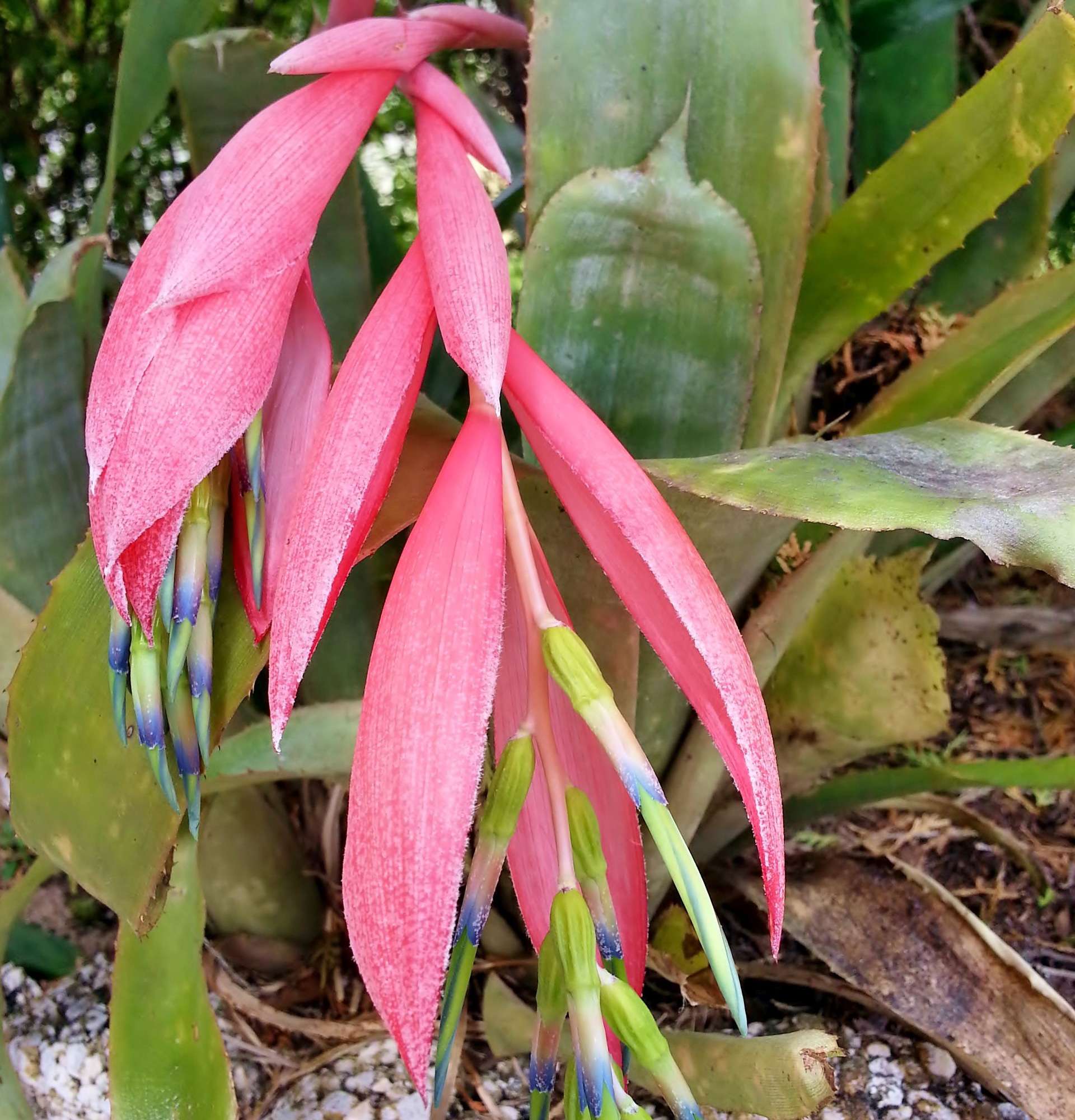
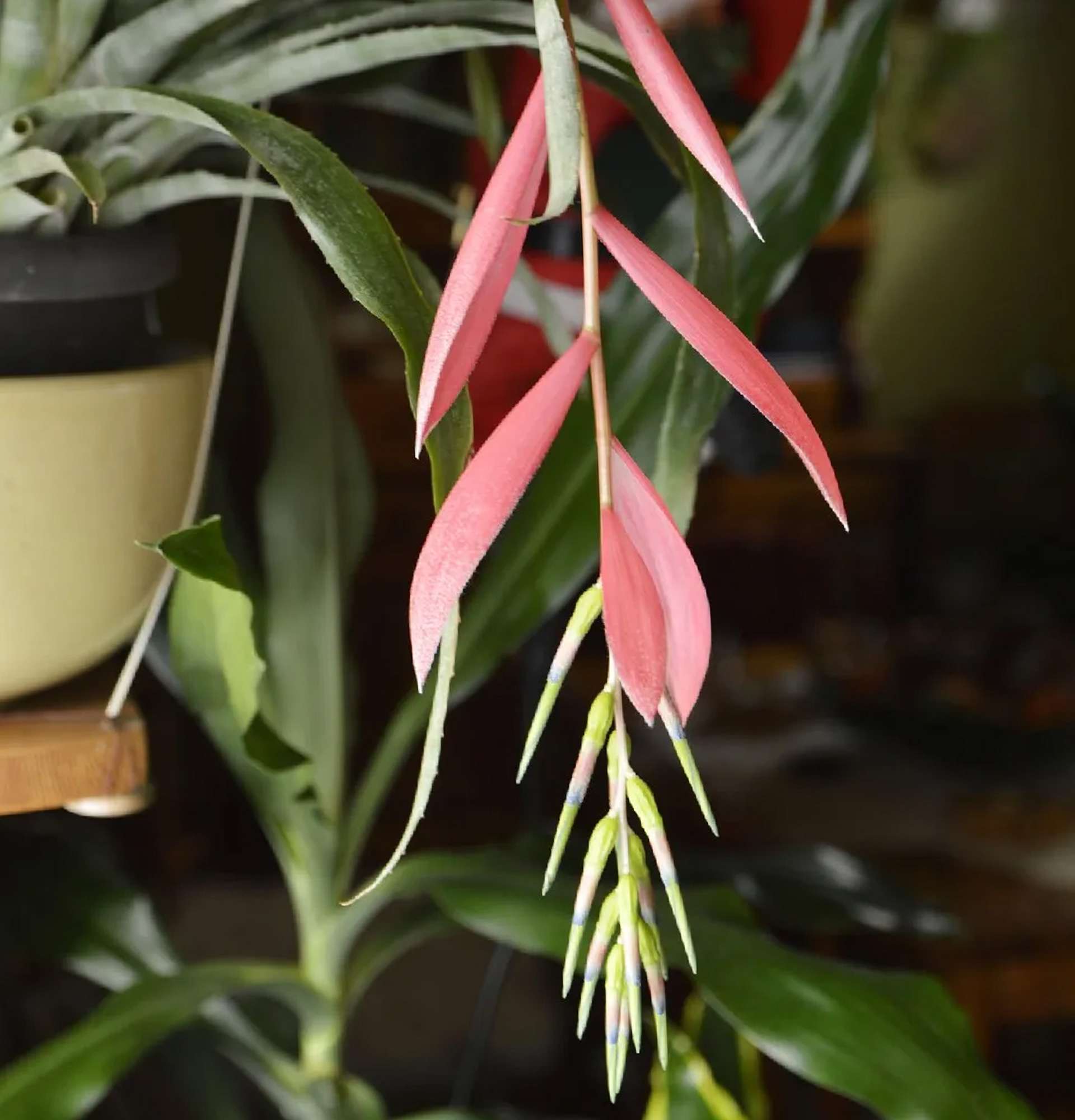
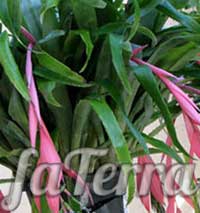 One of the most common varieties in home cultivation by flower growers is Billbergia nutans, which also has another name, "Queen's Tears." This epiphytic plant does not have a stem and reaches a height of forty centimeters. The green, narrow, strap-like leaves with thorns along the edges reach up to sixty centimeters in length. A characteristic feature is the change in the color of the leaves depending on the lighting.
In the dark, the leaves are dark green, and in the light, they acquire a pink-bronze hue.
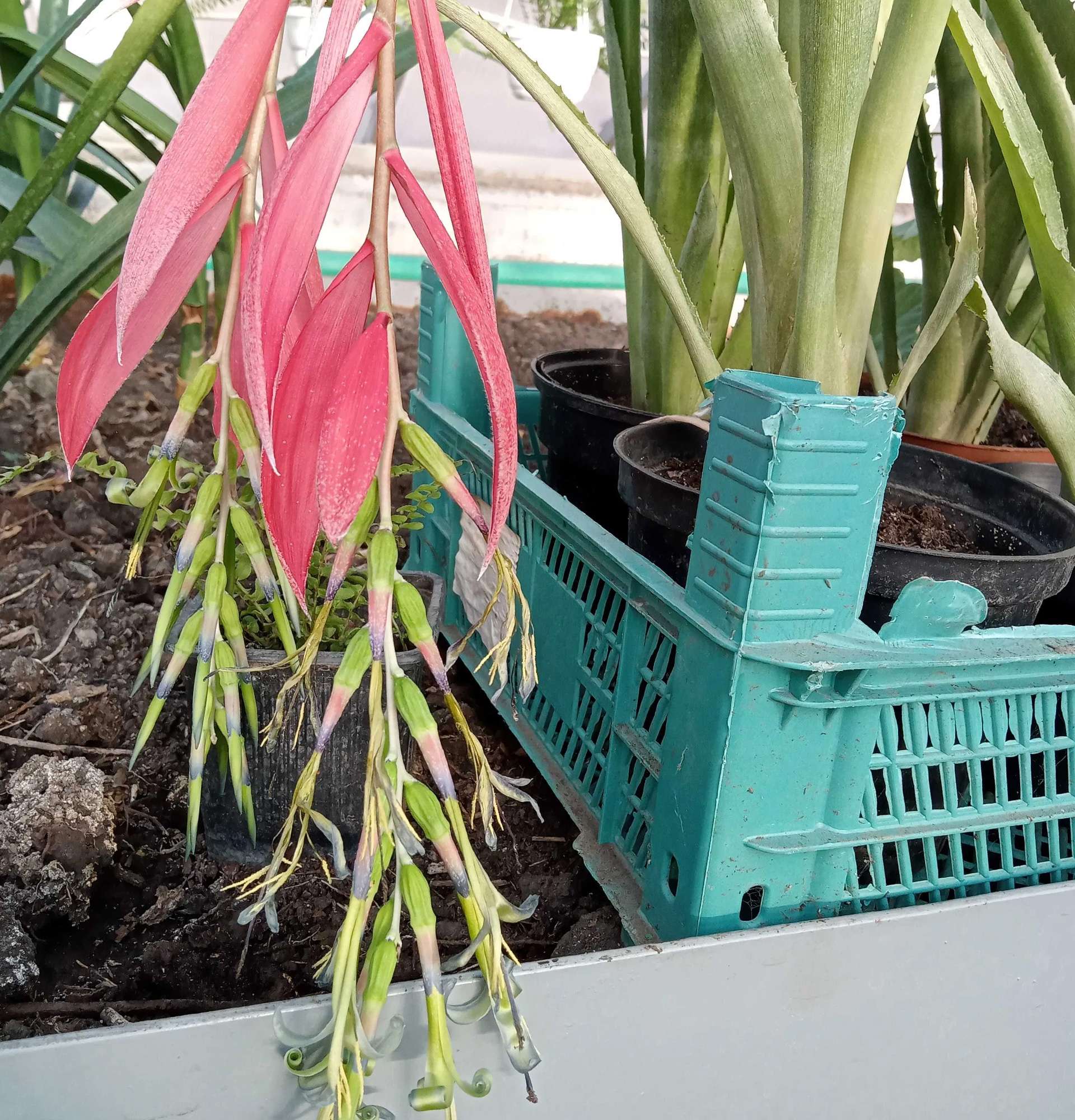
The leaves form a funnel-shaped rosette from which a drooping bud up to eighty centimeters long appears. The unusualness and uniqueness of this variety lies in its beautiful drooping inflorescences. And they are formed by yellow-green flowers, the petals of which have a bluish border, descending from under the bright pink bracts. The plant blooms in winter.
Billbergia magnifica
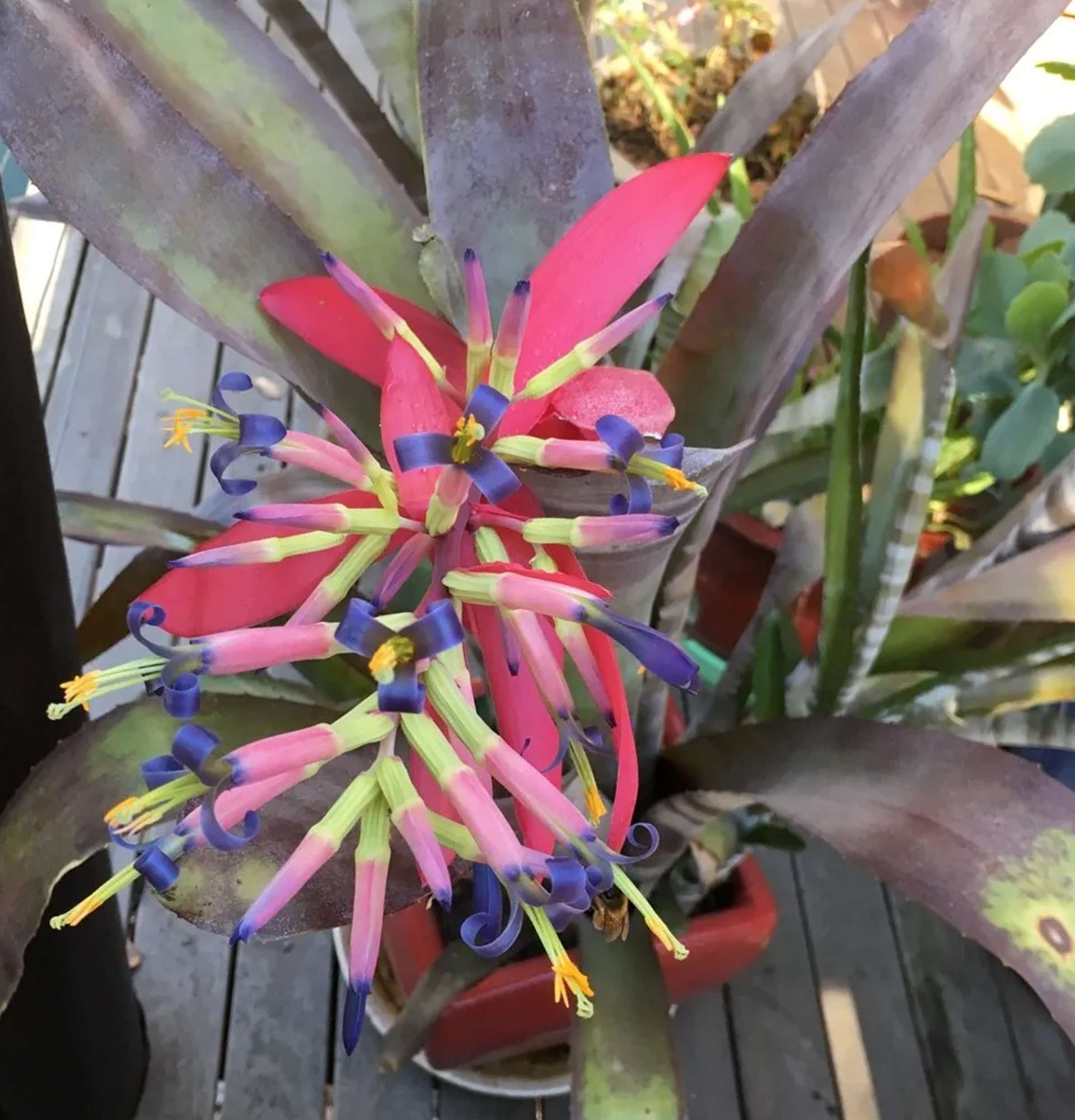
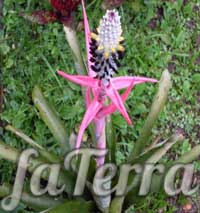 The native habitat of this epiphytic flower is considered to be southeastern Brazil. Narrow, dense, and hard leaves, up to seventy centimeters long, form an elongated, loose rosette. Light transverse stripes on the upper side of the bluish-green leaves significantly distinguish Billbergia magnifica from other species. A large, thirty-centimeter flower stalk, decorated with a loose, drooping inflorescence with blue, spiral-shaped petals in bright pink bracts. The plant blooms in summer. After flowering, berries appear.
Billbergia pyramidalis
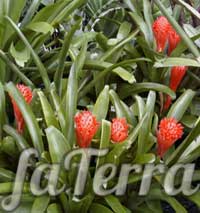 The tropical and subtropical territory of Brazil, the Antilles, and Venezuela is the homeland of Billbergia pyramidalis.
The leaves, which do not differ from the representatives of other species, form an elongated funnel-shaped rosette. The dense, pyramidal inflorescence, densely covered with light fluff, is tightly framed by leaves that are directed upwards. During flowering, from late spring to mid-summer, the leaves acquire a pink hue. The flowers of the plant have bright red, tongue-shaped petals with a bluish tint at the ends.
Billbergia viridiflora
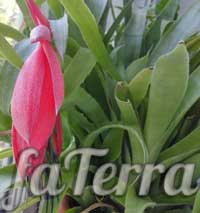 Southern Mexico is the homeland of this large epiphytic plant with a dense rosette. Billbergia viridiflora prefers to be located near the foot of the mountains, in forest areas near rivers. With the beginning of spring, the plant blooms. Green, five-centimeter petals decorate the flower stalk, framed by dark green, serrated, scaly leaves.
These species of Billbergia are desirable inhabitants in winter gardens and other living spaces, as they are less demanding in terms of care than other bromeliads, such as Vriesea.
Billbergia care in the home
Indoor Billbergia is beautiful and unique, especially when it blooms, throwing out a flower stalk with a bright inflorescence. Among the bromeliad family, Billbergia is considered the most devoted, hardy, and friendly. It adapts to any conditions. And to make the plant feel comfortable, it is necessary to familiarize yourself with some of the secrets of caring for it.
Temperature regime
It is advisable to avoid sudden temperature changes. It will feel good at a temperature of 18-20°C and can tolerate a short-term decrease to 13°C; under such conditions, the plant will bloom faster.
It should be remembered that constant cold will lead to diseases.
The summer temperature limit is 20-25°C.
Lighting
Intense diffused light is beneficial for the plant. In summer, the flowers should be taken outside as much as possible to be nourished by fresh air. It should be protected from rain and bright sunlight.
Humidity and watering
The optimal humidity is at least 65%; spray with soft water; water the plant moderately in winter and keep the soil moist in summer.
Soil
Light, fertile soil should consist of sand, peat, and leaf compost. A good drainage layer is essential.
Feeding
Feed the plant in the spring-summer period with organic or mineral soluble fertilizers in half the dose, with an interval of 15 days.
Billbergia propagation and transplanting
It can be propagated in spring or summer by offspring from the parent plant, when they reach half its height. It is necessary to separate the side shoot from the bush, let it dry for two days, and then plant it in the soil and do not forget to spray it periodically.
As the plant grows, the pot becomes too small for it. It is necessary to transplant it into shallow but wide pots. Good drainage is required. It is better to transplant the plant in spring.
Pests and diseases of Billbergia
The characteristic pests of Billbergia are:
- aphids,
- mealybug,
- scale insects,
- spider mites.
To prevent insects from appearing on the leaves on both sides and to prevent them from turning yellow, it is necessary to regularly inspect the plant. If unwanted guests appear, it is necessary to take immediate measures to destroy the pests, as diseases spread very quickly throughout the plant. First, wipe the leaves with a soapy solution, and then treat them with insecticides.
Write comments
Comments
Антонина